It’s hard to believe that your little one is about to start first grade! To help them start their education on the right foot, you’ll probably want to make sure they know how to follow instructions. Here are five fun ways to help your child develop this skill.
Children need to know how to listen if they’re going to follow their teacher’s instructions. Fortunately, listening is a skill that can be learned with time. You can help your child by telling them that they have a superpower: They might not know it yet, but they can read body language!
All they have to do is pay very close attention to the person who’s speaking. Encourage your child to focus on the following:
- The speaker’s eyes, which can signal a question, convey their mood, etc.
- Their hands, which can express an idea, give directions, etc.
- Their lip movements, which can help your child focus on and better understand the words being said
- Etc.
Small steps can lead to big results! Celebrating your child’s small victories will help boost your child’s self-confidence and keep them motivated. When they follow instructions, take a moment to acknowledge this accomplishment. For instance, you can do the following:
- Offer words of encouragement
- Highlight their progress
- Congratulate them for their efforts
- Etc.
Academic motivation and self-confidence go hand in hand. The more confidence your child has in their own abilities, the more likely they are to persevere in the classroom.
To fully understand instructions related to space and time, your child must be familiar with certain concepts, like the following:
- over/under
- furthest/closest
- above/below
- behind/in front
- before/after
- at the beginning/at the end
- next to/in the middle
- first (second, third, etc.)
- to the left/to the right
- Etc.
There’s nothing better than learning through play! To help your child learn words related to space and time, you can play a game using their favourite stuffed animal. Ask them to hide their fuzzy friend in different places around the house:
- Under the kitchen table
- In the middle of the living room
- Next to the family pet
- Behind the leafy plant
- Etc.
Almost all parents have played Simon Says or similar follow-the-leader games. They’re loads of fun, but can also be educational! Simon Says is a great way to teach your child how to follow instructions in a specific order.
To play, simply give your child a series of instructions, but they’re only allowed to do the action if you say, “Simon Says.” Here are a few examples:
- Simon Says touch your nose
- Simon Says touch your right ear, and then your chin
- Simon Says spin around, but only after doing two bunny hops
- Etc.
To make the game even more exciting, try to make each instruction a little more complex than the last. Giggles are guaranteed!
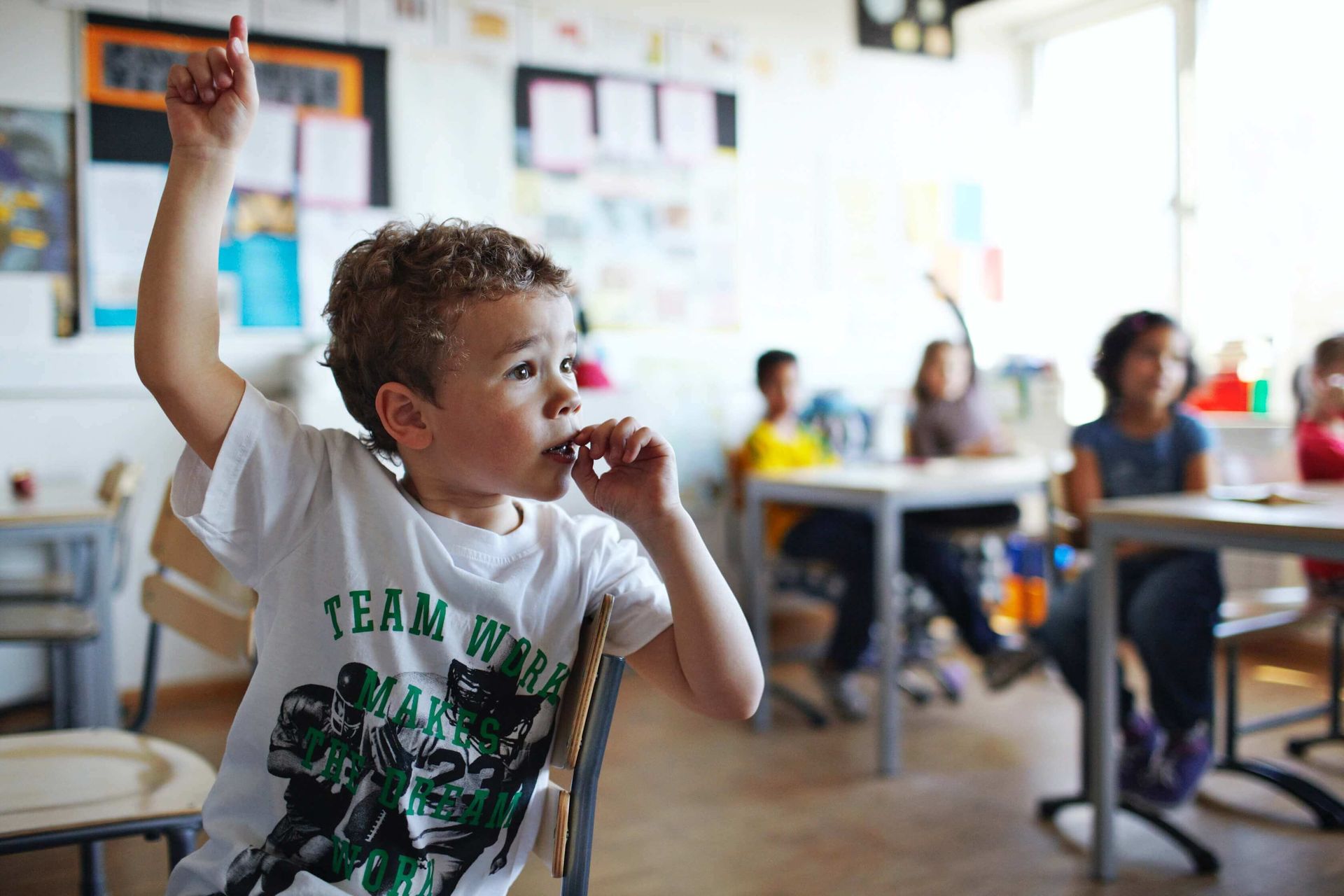
Knowing how (and when) to ask questions is very important. Questions can help clarify certain grey areas that would otherwise make it difficult to properly complete a task. To help your child follow classroom instructions, you can give them a few question-asking tips:
- Ask yourself if your question is relevant
- Wait until the teacher has finished speaking
- Raise your hand
- Wait until you have permission to speak
- Ask your question in short sentences
- Etc.
You can also remind your child that questions generally start with the following interrogative words:
- Which
- Who
- Whose
- What
- How many
- How
- Where
- Why
- When
- Etc.
To help your child better understand instructions, you can encourage them to play Monster House. As they read the descriptions and find each monster, they’ll show great improvements!
Rewriting: The Alloprof Parents’ team