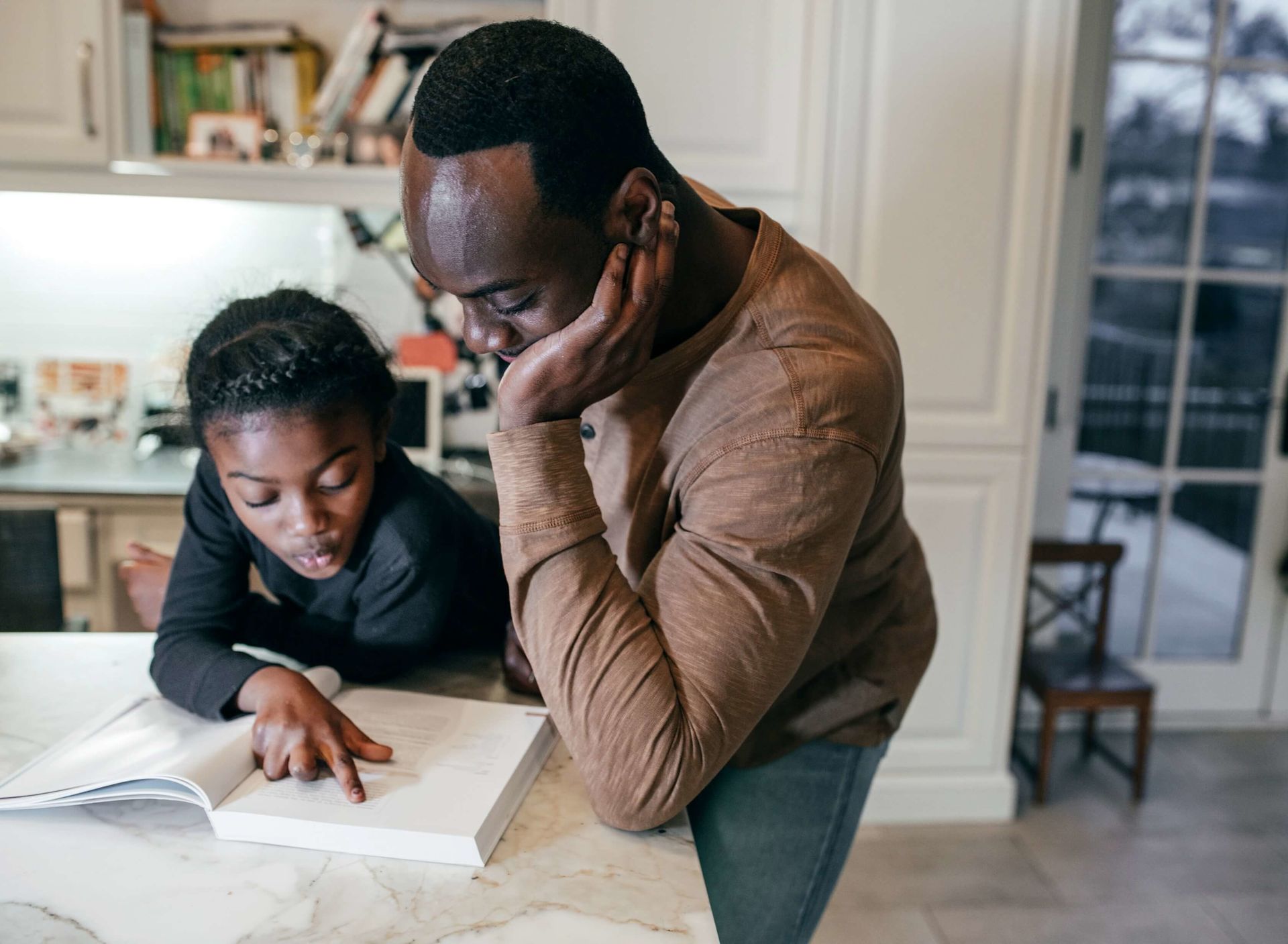
A good reader asks questions. Like a detective, they search for clues to make connections, predictions, and inferences, which allow them to develop a strong understanding and appreciation of the story. You can help your child become an engaged reader by using some simple strategies. Here are just a few.
Even before your child reads the first few sentences of a book, they can start to imagine what the story will be like. The images, titles, and subtitles give a general idea of the book’s narrative threads. You can guide your child through this exercise by asking them the following questions:
- What do you think the story is about?
- Any idea who the main character is?
- Where do you think the story takes place?
- Etc.
A child who visualizes what they’re reading will have an easier time understanding the story. They’ll also be more engaged. To help your child build mental images of a story, try the following:
- Take a short break after each sentence, paragraph, or page
- Help your child visualize the details
- Imagine how the scenes would look in a movie
- Draw important scenes
Important information in a book is easier to spot than you might think. It generally provides specific answers the following questions:
- Who?
- What?
- Where?
- When?
- How?
- Why?
- Since when?
When your child reads, they absorb new information. To read well, they must be able to consider a story’s elements in relation to what they already know. This ability to make connections is very useful for making predictions, understanding a text, and retaining content. Here are some questions you can ask your child to get them started:
- Have you read any other books by this author?
- Have you heard about this subject?
- Can you think of any similar stories?
Not all details in a story are explicitly stated. Some are suggested or implied. To discover them, your child needs to be able to read between the lines. By paying attention to certain clues, they can figure out what the author is inferring. Here’s an example:
- The sentence : “Outside, all the street lamps were on and illuminated the path.”
- The implication : The scene is happening at night.
To help your child learn to read between the lines, you can ask them questions. Here’s an example:
- Why do you think the street lamps are on?
- At what time of day do street lamps usually turn on?
To help your child better understand a text, try dividing it into several parts. Ask your child to read each part, then explain what happens in their own words.
Once your child has read a text, they should be able to retain the information. Here are a few helpful memorization tips:
- Highlight key words
- Write down important points
- Draw simple diagrams
- Etc.
Loss of understanding usually occurs when the reader loses the thread of the story. Watch out for these signs that your child no longer understands what they’re reading:
- They can’t visualize the story
- Their mind wanders
- They can’t explain the story in their own words
- Etc.
If your child is struggling to understand a book passage, they should take a break, ask questions, and do some research. For example, they could do the following:
- Reread the sentence or paragraph they don’t understand
- Pay specific attention to punctuation
- Think about the metaphors (e.g., the lake was a mirror = the lake was calm and reflective)
- Look up unknown words in the dictionary
- Etc.
Writing : The Alloprof Parents' team