Organization is a breeze for some children, but a real challenge for others. Thankfully, establishing a work routine, setting priorities, and putting ideas in order are all skills that can be learned.
Extrait du balado « Survivre aux devoirs : vos questions à Alloprof », à écouter en entier sur Radio-Canada OHdio.
Getting organized means learning how to manage your time. Agendas and monthly calendars are two tried and tested tools. They can help your child develop excellent time management skills and offer them a better overview of their tasks.
An agenda is a student’s best friend—as long as it doesn’t get lost or forgotten. Your child should make sure to always have it with them, whether they’re at home or at school. They can use it to keep track of their homework, lessons, test dates, parental forms, upcoming activities, and more. Plus, your child can do the following:
- Check if a task was completed
- Write down tasks in detail
- Plan time to study for a test
- Give themselves reminders
- Spread study sessions over several days
- Organize their time at home and at school
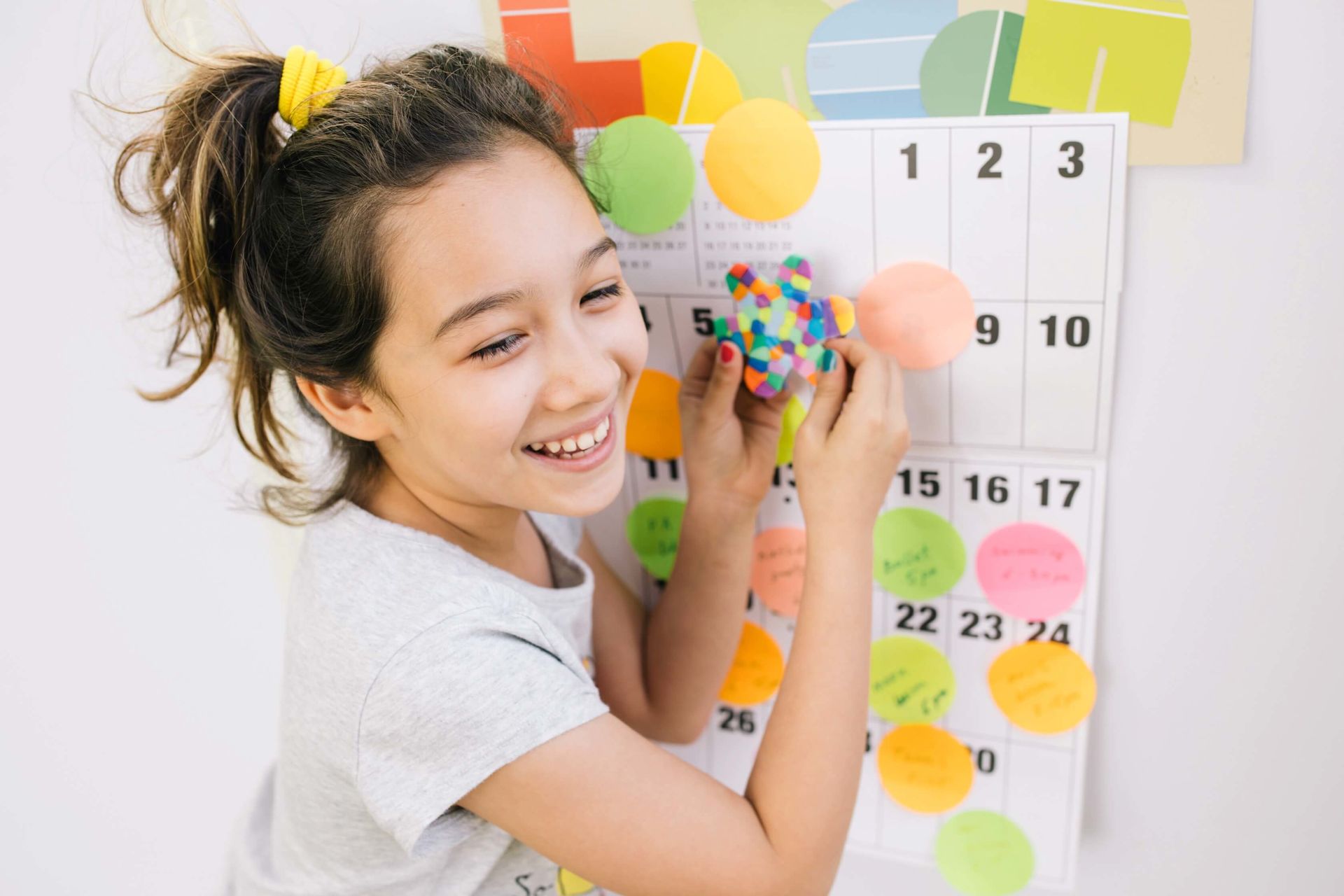
A calendar gives your child an overall picture of their tasks. When displayed in a strategic location (like on the refrigerator), it also allows you to follow your child’s schedule and give reminders if necessary. Here are a few other benefits:
- Your child can situate themselves in a seven-day week
- They can anticipate upcoming activities
- You can keep track of your child’s activities and assignments
A family calendar is undoubtedly one of the most practical tools for organizing kids’ homework and other family activities. To help make your life easier, here’s a list of handy items to include.
- Extracurricular activities
- Birthdays
- Changes in routine (e.g., a friend will be picking up your child after school, the babysitter is coming in the evening)
- Family vacation
- Lessons (e.g., music, dance, karate)
- Exam dates
- Assignment due dates
- Registration deadlines (e.g., for school, daycare, day camps)
- Daycare schedule (if applicable)
- Public holidays
- Pedagogical days
- Special days (e.g., pyjama day, theme days)
- Report card days
- Parent-teacher meetings
- Appointments (e.g., pediatrician, dentist, speech therapist)
- Special meals
- School performances and field trips
- Sportswear for physical education classes
- Non-routine items (e.g., supplies for a DIY project)
Even as adults, it’s easy to feel like everything on our to-do list is urgent. Being able to prioritize tasks is a valuable asset. It allows us to get things done on time without unnecessary stress.
A child who knows how to plan and organize is more likely to succeed in school. These skills allow them to do the following:
- Hand in assignments on time
- Apply effective work methods
- Be well prepared for tests
- Stay motivated
- Complete tasks
- Etc.
There are plenty of strategies that you can try with your child to help them develop their sense of priorities. Here are just a few:
- Start with the longest or most difficult assignments
- Start with the assignments that are due the soonest
- Spend 10 minutes on each task and take a break between each one
- Make a work plan and schedule each step in a logical order
- Plan the days when each step will be completed
- Etc.
Your child may struggle to complete a long or complicated assignment in one sitting. To help them stay motivated, you can encourage them to split the work into smaller tasks. Every time they finish a task, their confidence will increase, and the project will feel more manageable.
Colour coding can be very useful. For example:
- Orange for urgent tasks
- Blue for long-term tasks
Writing : Viviane Asselin
Scientific review : Mathieu Labine-Daigneault, learning specialist
***
Rewriting : The Alloprof Parents’ team
Dunlosky, John, Rawson, Katherine A., Marsh, Elizabeth J., Nathan, Mitchell J. et Willingham, Daniel T., « Improving Students’ Learning With Effective Learning Techniques: Promising Directions From Cognitive and Educational Psychology », Psychological Science in the Public Interest, 14, 1, 2013, 4-58.