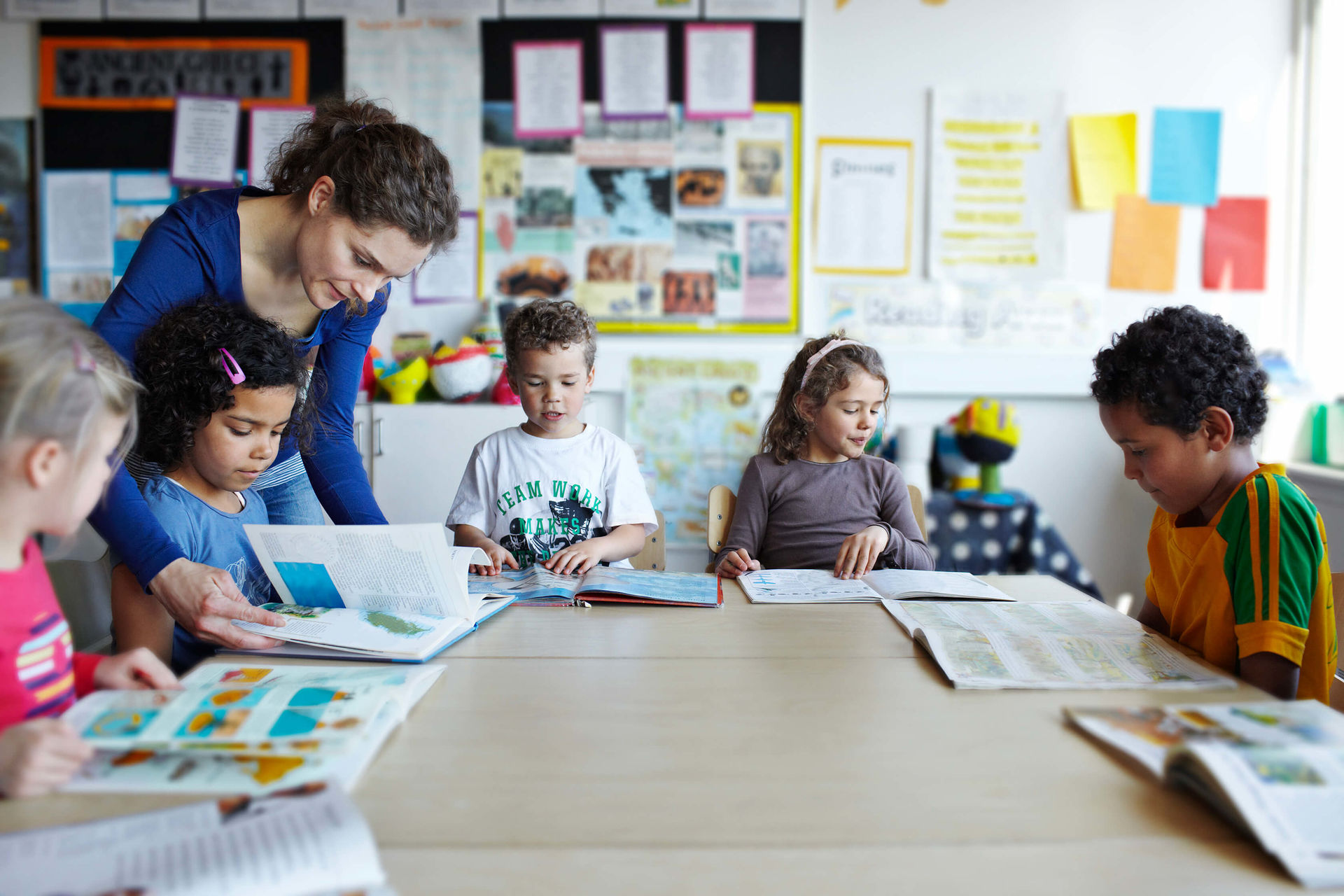
Moving to a new country comes with plenty of challenges. To help children from allophone families (whose first language is not French) learn French and integrate into Quebec society, they are first placed in welcoming classes. In these classes, children receive help learning French (link in French) and the codes and values of their new environment. In this article, we have put together some basic information to help you understand welcoming classes.
Most Welcome classes are found in the Greater Montreal area, which is the main destination for newcomers (the second most popular destination is Sherbrooke). Some newly arrived children will join welcoming classes, where they can meet children of different origins and ages. This transition period varies in length, but children will generally stay in the welcoming class for an average of ten months.
Schools group students in Welcome classes according to the number of attending allophone students, their level of French, their ages, and the available teaching staff and resources.
In some schools, allophone children integrate directly into regular classes, but receive support in learning French. Direct immersion in a regular classroom is becoming an increasingly popular option around the world.
Teachers in Welcome classes assess the students’ French skills and create sub-groups as needed. For example, there may be one sub-group for beginner students, and one for more advanced students. The instructors use various teaching methods and tools to communicate with their students and help them learn French. These can include the following:
- Non-verbal language (gestures), picture books, and pictograms
- Songs, nursery rhymes, and theatrical expressions
- Repetition of everyday vocabulary words
- Translation apps
- Multilingual books
- Fun and games
- Celebrating the students’ mother tongues as a way to enrich their learning
- Etc.
Welcome classes provide environments for non-French speaking children to receive support in learning French and integrating into Quebec society. Children receive intensive instruction in French. The French program is called ILSS (Intégration linguistique, scolaire et sociale), meaning linguistic, academic, and social integration. Some of the benefits of welcoming classes include the following:
- Fewer classes to attend
- Teaching strategies adapted to the children’s realities
- Rapid progress in learning a second language
- Shared experience of social and educational integration
- Reassurance from students who speak the same language
- Exposure to the linguistic and cultural diversity of other students
- Gradual integration into the regular class
- Etc.
The Welcome class teacher can make requests for support for the student, whether in language, remediation, speech therapy, or anything else the student may need in order to integrate into the regular classroom.
No student should be denied access to complementary services because they are in a welcoming class or are receiving reception services and support for learning French.
Every child has different skills and will learn a new language at their own pace. It is normal to feel that they are learning slowly, especially in the first few months. But you will see how much they progress after only a few short months! How long a child stays in the welcome class may vary depending on their needs and personality, as well as how quickly they learn the language. There is no minimum or maximum time frame. Students typically attend Welcome classes for ten months, but they may use the service for as long as they need it.
Once a child has progressed enough in the Welcome class, they are integrated into a regular class at the appropriate grade level for their age. The teacher uses an evaluation grid to determine if the student has reached their age-appropriate level, even if they have been in the welcoming class for fewer than 10 months.
Some students may need to be integrated at a lower grade level, but this is not generally the case. It is also possible to keep the student in the welcoming class for a longer period, as their needs require.
There is no set date in the school year for students to transfer from the Welcome class to the regular class. However, it is usually best to wait until the end of a school term, when they have received a report card or an assessment, before moving them to another class or school.
In the Welcome class, the teacher does not base lesson planning and assessments on age, as is the case in a regular classroom. In addition, school cycles and grade levels are not taken into account when evaluating student progress. Instead, progress is measured according to an assessment grid based on specific learning benchmarks.
Newly arrived families may find adapting to a different society and language particularly stressful. And your child’s academic success is likely something you take to heart. Fortunately, Alloprof is here to support you during your child’s educational journey and integration into school, with a myriad of tools and resources at your fingertips. Here are some ideas:
- Help your child learn the alphabet
- Use fun strategies to learn vocabulary words
- Discover tips for learning another language
- Find free tutoring services (link in French)
- Read together:
- Recommended books about moving (ages 6 to 11)
- Recommended books about moving (ages 12 to 17)
- Book recommendations to prepare your child for kindergarten
- French-language nursery rhymes for preschoolers
- Recommendations for one-of-a-kind picture books
- Search for multilingual books in public libraries or by accessing this directory (available to users of the public school system).
- Practise with Alloprof’s interactive games and exercises
- Consult the Ask a teacher service at Alloprof
- Etc.
You can help your child learn French even if it is not your own language. Read our blog post for tips on how to support a child who is going to school in a language you do not speak. Happy reading!
Writing : The Alloprof Parents' team