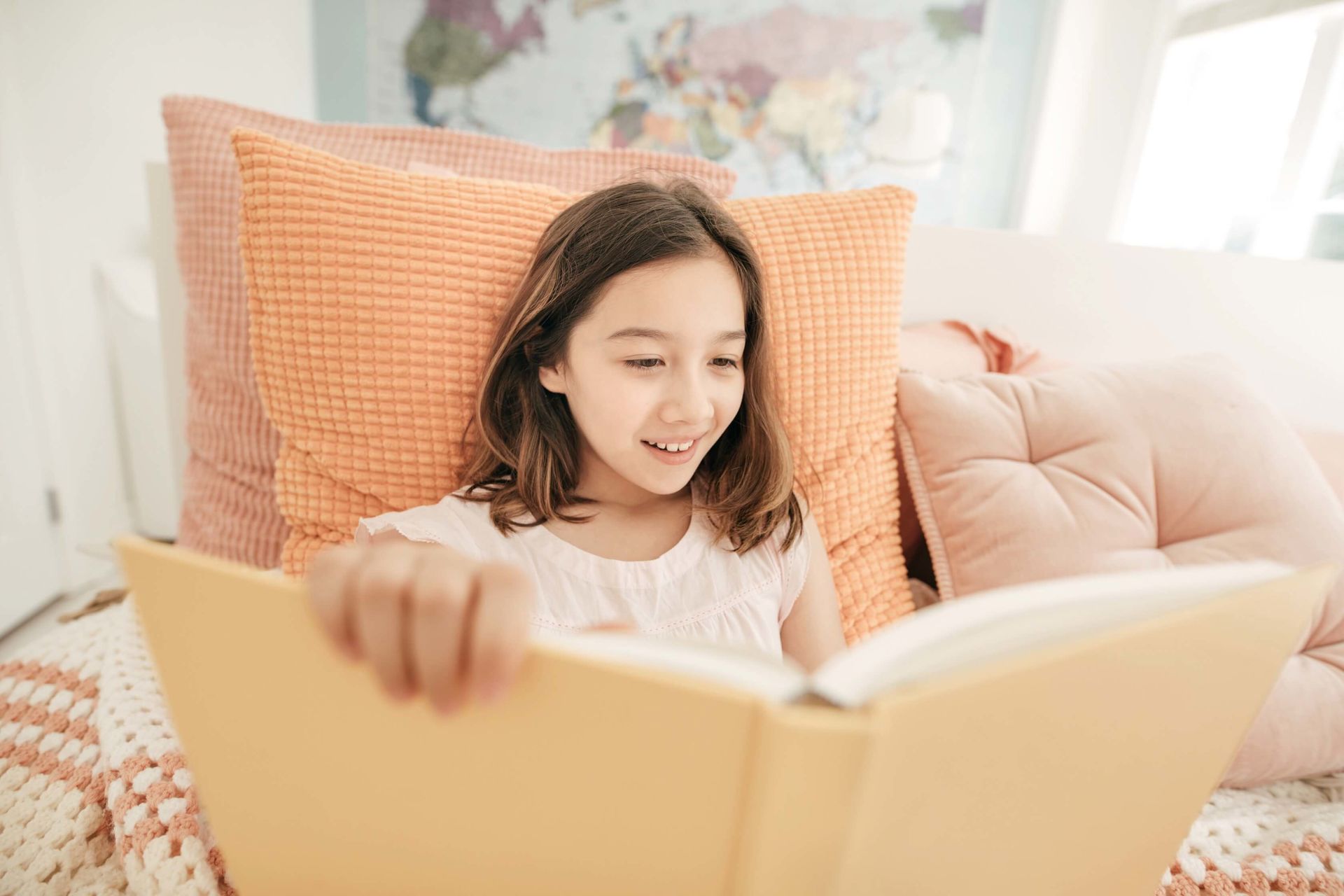
Does it seem like your child doesn’t enjoy reading? What if they just haven’t found a book or genre they enjoy yet? The joy of reading may be just a few pages away!
When choosing a book for your child, don’t worry about the word count or whether it has illustrations. It’s more important for the book to align with your child’s abilities and interests. If a book is too hard or discusses a topic that doesn’t interest your child, there’s a good chance it will collect dust on the shelf.
By reading a variety of books, your child will expand their knowledge base and have a higher chance of becoming a book lover!
Some children develop an early preference for one book format over another. Feel free to explore and borrow a wide variety of materials from the library. This way, your child will always have something on hand that they’ll enjoy and that gets them motivated to read.
Here are a few examples of different written works:
- Comic books
- Graphic novels
- Songs
- Magazines
- Picture books
- Novels
Letting your child choose from a variety of formats will give them a taste for reading . . . in their own way!
You can also introduce your child to different ways of reading.
- Paper books give readers the tangible experience of holding a book in their hand and turning the pages, while also promoting concentration.
- Audio books can turn reading into a shared experience. They’re ideal for listening to a story with the whole family, in the car or at home, and they let you read while doing other activities.
- Digital books are especially handy when you’re on the go: with an e-reader or tablet, you can take a full library with you in one small device. They’re great for long trips and daily commutes.
It’s also a good idea to introduce your child to a variety of genres, so you can get a better idea of what appeals to them and feeds their curiosity. Remember that children’s tastes and interests are constantly evolving. A child who loves funny stories could very well grow into a tween who can’t get enough of adventure or fantasy novels! Exposing your child to a variety of literary styles helps them develop their identity as a reader, while fostering their motivation to read. Be open to their current preferences, but also encourage them to explore new genres over time.
Here are a few popular story genres.
| Genre | Definition |
| Adventure | The characters face all kinds of adventures, surprises, and dangers. |
| Detective fiction | The story revolves around a puzzle or mystery to be solved, often linked to a crime or theft. |
| Fantasy | The story mixes elements of the real world with the strange and supernatural and sometimes seeks to surprise or frighten the reader. |
| Science fiction | The action takes place in an imaginary world, often set in the future, with new technologies or surprising discoveries. |
| Psychological fiction | The story focuses on a character’s thoughts, feelings, and inner growth. |
| Historical fiction | The story immerses us another era, blending real facts with invented elements. |
| Romance | The characters’ feelings of love and emotion are at the heart of the story. |
| Coming-of-age | The main character undergoes trials or achieves milestones that help them grow and mature. |
To fall in love with books, you first need to love the subject matter. If your child doesn’t like reading, try to identify topics that interest them. Help them get a taste of different book genres and figure out which ones pique their curiosity.
- Check out Alloprof’s book recommendations for elementary schoolers and high school students.
- Discover a selection of extraordinary books for preschool, elementary, and high school students on the Ministère de l’Éducation’s Constellations website. Anyone can access this tool at any time!
- Take the À go, on lit ! quiz (French only) to discover your child’s reader profile!
- Use Alloprof’s reader-friendly bookmark to make reading more fun.
Éducation, Loisir et Sport Québec (2011). Progression des apprentissages au secondaire, Français langue d’enseignement. pp.89. Récupéré à http://www.education.gouv.qc.ca/fileadmin/site_web/documents/education/…
Genres littéraires, Document remis aux étudiants du séminaire de maîtrise sur la littérature jeunesse DID 6205, par Monique Noël-Gaudreault, Département de didactique, Université de Montréal
Plus on est de fous, plus on lit, [En ligne], (Pages consultées le 25 février 2018) :