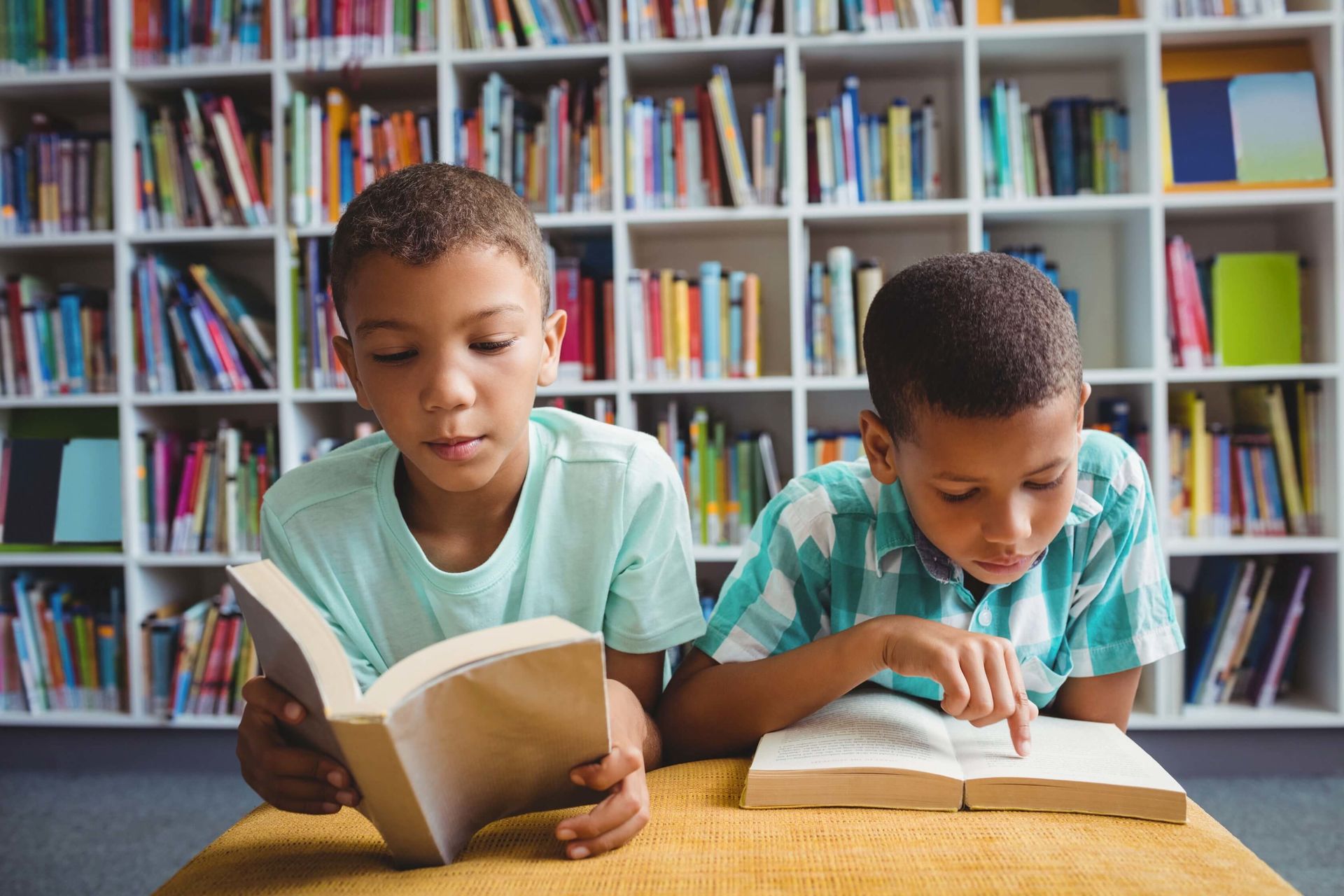
It’s a well-known fact that reading can help you succeed in life. A student who reads is more likely to do well academically. Why? Because reading is integral to all subjects, not just English and French class. With that in mind, here are some tips to foster your child’s love of reading.
Extrait du balado « Survivre aux devoirs : vos questions à Alloprof », à écouter en entier sur Radio-Canada OHdio.
If your child says they don’t like to read, it might be because they haven’t found the right book. Between their required school readings and the text on the back of cereal boxes, there’s a wide range of book genres and authors to discover. To get your little one hooked on reading, help them discover a variety of books:
- Crime fiction
- Fairy tales
- Adventure fiction
- Fantasy
- Psychological fiction
- Etc.
If your child already enjoys curling up with a book, you can create a dedicated reading nook at home to foster their interest. But if they’re not a bookworm by nature, you can try a different technique: leaving books around the house. Sooner or later, they’ll pick one up!
Here are some clever places to leave your literature:
- In the car
- In the bathroom
- By the bathtub
- On your child’s nightstand
- On the sofa
- Etc.
If your kid views reading as a chore, a 200-page book isn’t the best choice for them. To pique their interest, you can suggest shorter reads:
- Picture books
- Short story collections
- Stories you’ve written
- Etc.
Comics are their own artform. They not only help the reader understand the story, but also offer insights into the characters’ emotions, the time period, and more. And like novels, there are comics for every taste!
According to a recent study, most boys read significantly less than girls. If this is the case with your son, encourage him to check out comic books. He’s more likely to enjoy this form of storytelling.
Reading is contagious! If you lead by example and read around your child, they will likely start to mimic your behaviour. Here are some tips to help you become a reading role model:
- Talk about what you’re reading
- Do reading-related activities together (e.g., visit the library, a book fair, the bookstore)
- Read as a family
- Schedule reading time during vacation or on weekends
- Etc.
When you and your child read together, deep in your own fictional worlds, you not only set a good example, but also create lasting memories!
Writing : Amélie Cournoyer
Scientific review : Nathalie Paquet-Bélanger, orthopédagogue
Rewriting : Alloprof Parents' team
Éducation Ontario, Moi lire, tu blagues? Guide pratique pour aider les garçons en matière de littératie, Gouvernement de l’Ontario, 2005, 64 p.
Lebrun, Monique et Colette Baribeau, Les pratiques de lecture des adolescents québécois, Sainte-Foy, Éditions MultiMondes, 2004, 313 p.
Millard, E., « Differently Literate : Gender Identity and the Construction of the Developing Reader », Gender & Education, volume 9, numéro 1, 1997, p. 31-48.
Ministère de l’Éducation, du Loisir et du Sport, La lecture et l’écriture chez les garçons… de A à Z, Gouvernement du Québec, 2009, 32 p.
Trudel, Cynthia, Pour la réussite scolaire des garçons en lecture en deuxième année du primaire : des dispositifs prometteurs, Rimouski, Université du Québec à Rimouski, 2013,132 p.