Children (and even some adults) tend to think they’re no good at math anytime they get a wrong answer. This is often a false perception, however, because math skills go far beyond numbers. Mathematics is also a matter of logic, reflection, creativity, and other skills. Surprising as it may seem, many people do have a knack for math!
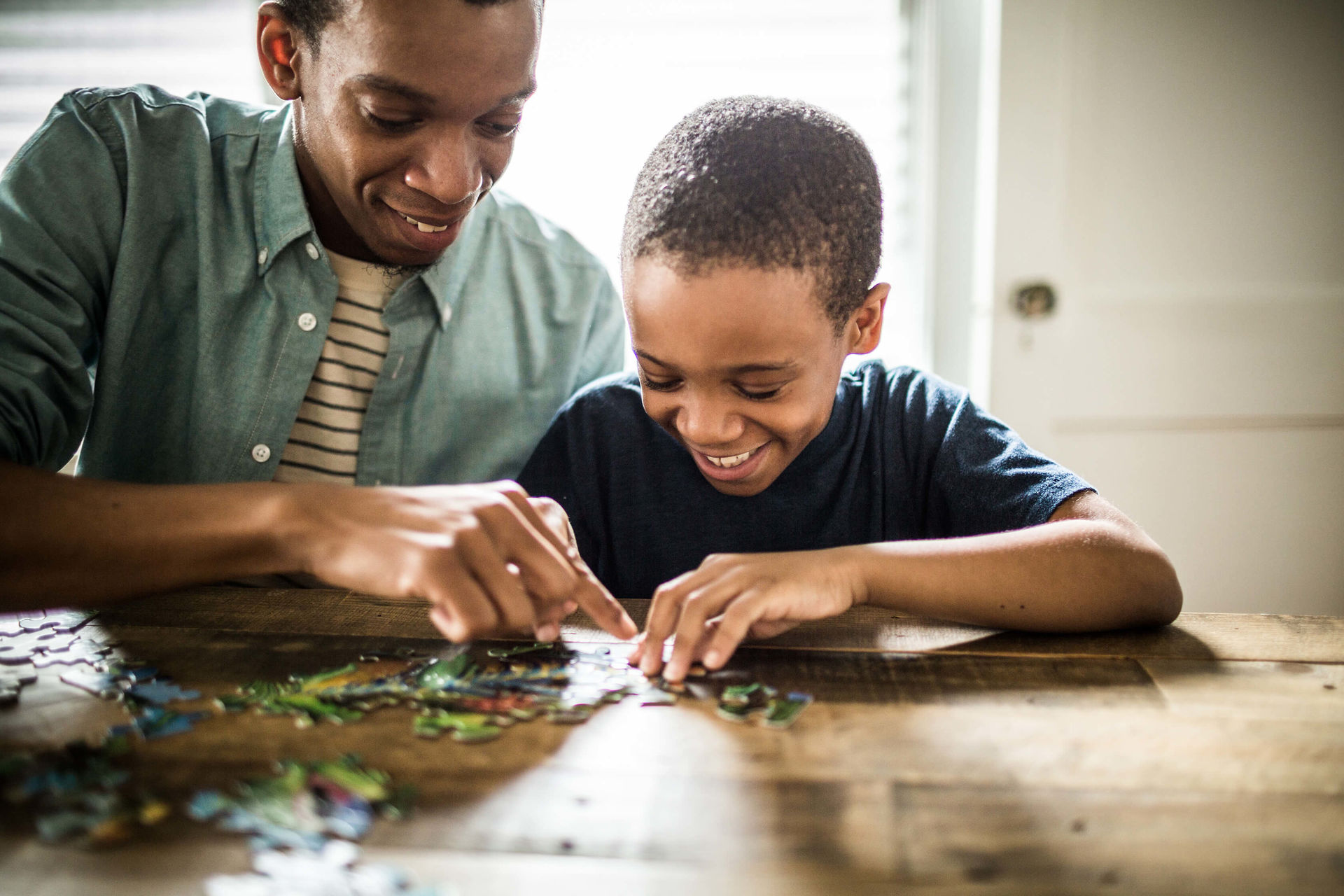
Creativity isn’t just for the arts! It’s also important in mathematics, a subject that calls for more than just rational thinking. To solve a math word problem, your child must be able to imagine different solutions. Certain activities can help them exercise their creative muscles:
- Puzzles
- Rubik’s Cubes
- Programming
- Climbing
- Etc.
Behind each mathematical process is a method. Thinking analytically is a skill that can be learned. To help your child reason more quickly and effectively, suggest that they do the following:
- Practise solving math puzzles
- Put a deck of cards in order
- Explore certain questions (e.g., Why do students learn math in school?)
- Etc.
Logical thinking is the reasoning behind an idea or response. Not surprisingly, it’s essential for problem solving. To help your child improve this critical mathematics skill, try asking them to do the following:
- Explain how they arrived at an answer or built something
- Outline the steps of a project before getting started
- Make a homework plan
- Etc.
“Why?” is every child’s favourite question. It’s such a simple word, yet so powerful at the same time. Asking “Why?” can uncover the motivation behind any given action. To get your child used to figuring out the whys and wherefores, turn the tables and ask them an endless stream of questions:
- Why did you use the pink pencil for the sun in your drawing?
- Why do ice cubes melt if I put them in the refrigerator?
- Why do you have to put on your shoe before tying your laces?
- Etc.
Estimation is used to predict an outcome and verify its accuracy. For example, if you estimate that your groceries will cost $100, but the total comes to $150, you’ll probably want to check the receipt and do a recount. Estimation is also used to test hypotheses when it comes to math problems. To help your child get the hang of making estimates, encourage them to estimate the answer to questions like the following:
- How many glasses of water will it take to fill this pot?
- How long do you think it will take to get to Grandma’s house?
- How many cherry tomatoes would you need to completely cover this plate?
- Etc.
Looking for ideas to stimulate your child’s interest in mathematics? You’ll find lots of great tips right here!
Writing : The Alloprof Parents' team
Entrevue téléphonique avec Benoît Morand, Maître ès sciences, M.Sc., enseignant en mathématiques.
TRGALOVA, JANA. « Des ressources pour favoriser la créativité mathématique des élèves ». Mooc eFan Maths.