Ever heard the expression, “learning is child’s play”? There’s some truth to this saying, as games have been shown to help little ones learn. Read the following article to find out how!
Games, like drawing pictures and solving riddles (to name just a few) stimulate creativity in children. Having a good imagination is a big advantage at school, as it helps students learn to do all sorts of things:
Games are a wonderful way to learn new vocabulary. Whenever you play with your child and take the time to describe your actions, emotions, or surroundings, they learn new words. With this new knowledge, they’ll be able to do the following:
- Name their emotions
- Express their thoughts clearly
- Understand instructions
- Learn to read and write more easily
- Etc.
Memory is essential for learning! Without it, children (and adults!) would be incapable of storing the information they receive. Games are a great way to help the brain retain information! Here are some activities you can do with your little one to stimulate their memory:
- Learn nursery rhymes
- Play cards (e.g., a memory game)
- Recite poems
- Put on a short play
- Etc.
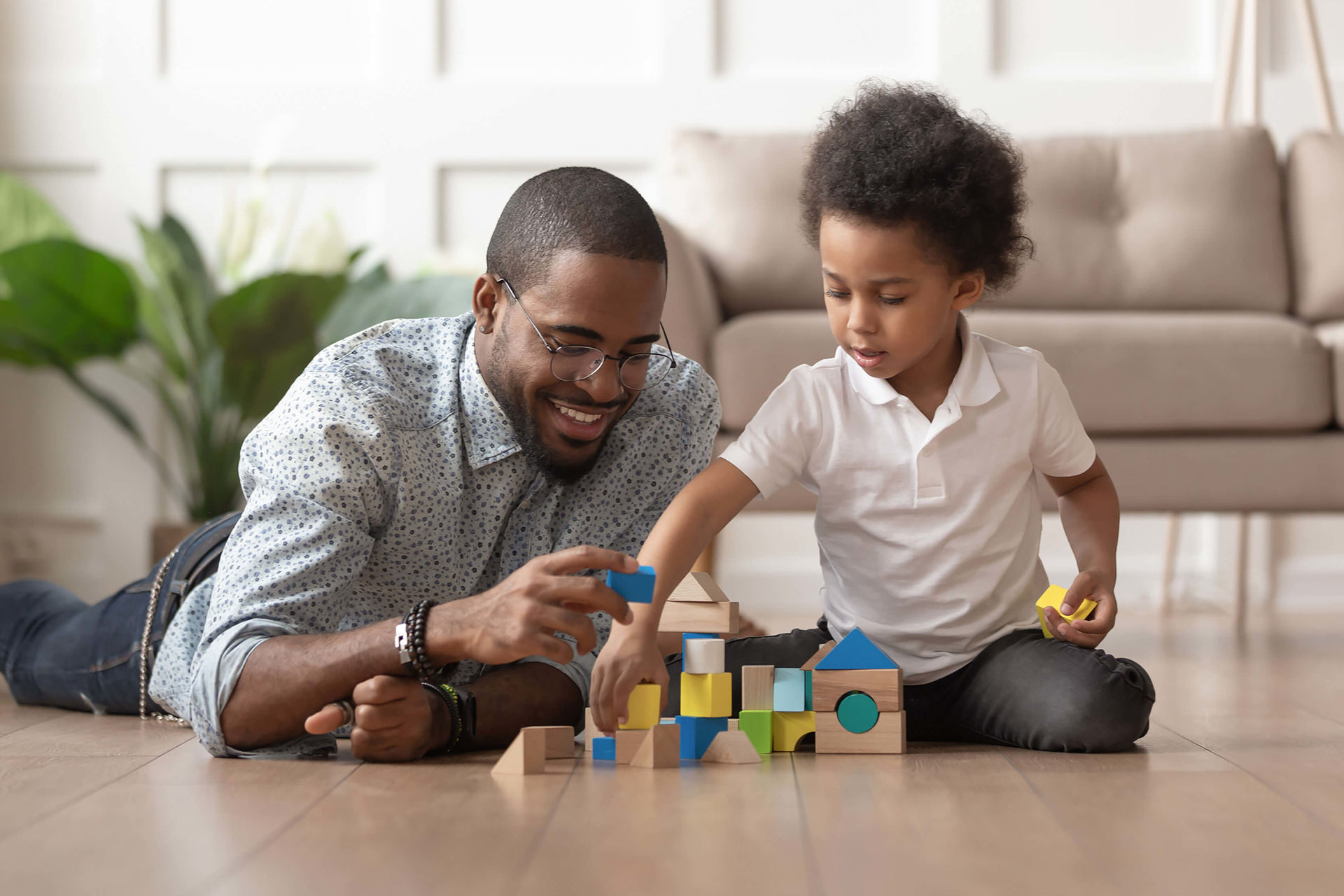
When children play, they learn to identify problems, test different hypotheses, and find solutions to problems—without even realizing it! Playing with blocks, doing science experiments, and building sand castles are all activities that can teach children how to solve math word problems. That’s because they’re unconsciously learning how to answer these important questions:
- What do I know for sure?
- What do I need to figure out?
- What steps should I take?
- What do I need to check?
- Etc.
When children play, their brains secrete hormones that reduce stress. When they’re relaxed, they’re more receptive to learning and have an easier time retaining information. Try to do educational activities with your child whenever you have the opportunity:
- Do puzzles
- Draw pictures
- Play with blocks
- Etc.
Looking for more ideas to help your child learn through play? Check out our suggestions for educational activities.
Writing : Alloprof Parents' team
SAUVÉ, LOUISE – RENAUD, LISE ET GAUVIN, MATHIEU (2007). « Analyse des écrits sur les impacts du jeu sur les apprentissages ». Revue des sciences à l’éducation, vol.33, no.1