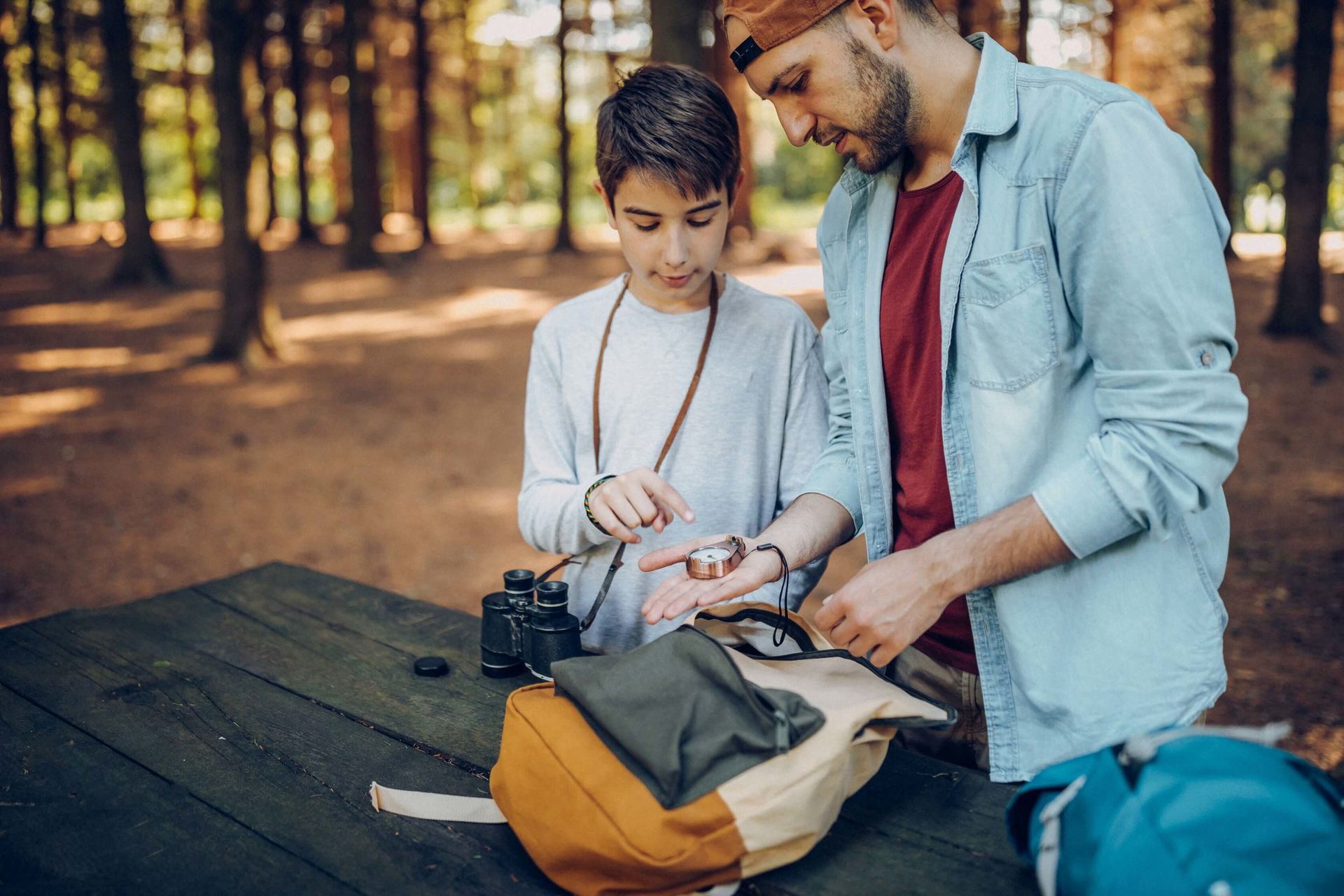
Want to help your budding geographers explore their passion and better understand the world around them? Try out these fun and educational activities in the comfort of your home.
Climate change refers to any weather change, small or large, that affects our planet over time. It includes variations in temperature, precipitation, or wind patterns, among others. No matter what form these changes take, they have a direct impact on our daily lives. To help your child understand the impact humans have on planet Earth, you can encourage them to develop a climate change action plan. Here are some ideas to get them started:
- Determine the causes of climate change
- Note weather changes that have already been observed
- Predict what will happen to Earth if we don’t take action
- Find concrete ways to reduce your environmental footprint at home (e.g., recycle, repurpose, compost, bicycle more often)
- Make a family action plan brochure
- Etc.
Canada has 39 parks and reserves that are regulated according to the International Union for Conservation of Nature’s standards. Scattered across Canada’s six natural regions, these environments are home to a beautiful array of ecosystems. You can help your child do the following:
- Choose a park they’re interested in
- Research its fauna, flora, geography, etc.
- Draw a map of the park with its animals and vegetation
- Etc.
Most countries have their own national animal. Each one has special historical significance. For example, the Canadian national animal is the beaver because of its importance during the fur trade . Here are some fun ways to learn about national animals around the world:
- Determine which animal corresponds to each country
- Search online for information about each animal (e.g., habitat, physical characteristics)
- Print a world map
- Draw each animal and glue them on the map
- Etc.
Countries also generally have a national plant. You can suggest this alternative to your child if animals don’t spark their interest.
Why not use the world’s capitals to create your very own trivia game? You can help your child do the following:
- Identify 20 world capitals
- Find relevant information on each city (e.g., a famous monument, the number of inhabitants, a geographic feature)
- Write questions and answers for each capital
- Etc.
One of the most common tools used by geographers is the magnetic compass. Compasses are used for orienteering and are quite easy to make. Your child will need these items:
- A magnet
- A bowl of water
- A flat slice of cork
- A sewing needle
Instructions:
- Magnetize the tip of the needle by rubbing it on the magnet at least 60 times
- Stick the needle horizontally into the cork’s edge
- Place the cork and needle into the bowl of water
- Watch as the needle points north
Geographers often need to conduct interviews with the public to better understand their experiences. You can encourage your child to call different family members (e.g., uncles, aunts, grandparents) to ask them about a specific situation. For example, your child might want to understand how a season change can affect a person’s habits. You can help them do the following:
- Come up with questions
- Take note of similar responses
- Compare responses by category (e.g., age, region)
- Put all the data together
- Make a graph to explain certain trends
- Etc.
Cities, buildings, and monuments are remnants of our past. Learning more about the urban territories (heritage cities) that have shaped our history will help broaden your child’s general knowledge. You can encourage them to do the following:
- Visit UNESCO’s website
- Search online for information on Paris, Rome, and Athens
- Etc.
A compass rose indicates the cardinal and intercardinal points (north, south, east, west, etc.). It’s very useful for orienting yourself on a map and finding your bearings. Find a compass rose template online and show your child how to make their own. Once it’s made, ask your child to do the following:
- Determine the exact position of the living room
- Find their way using a road map
- Etc.
One of the purposes of teaching geography is to help kids better understand their environment. So, why not encourage your child to dream up their ideal city—one that respects its natural environment and its people? Ask them to consider the following elements:
- Plant life
- Heat islands
- Types of housing
- Parks
- Municipal operations
- Etc.
Allô Monde gets kids to complete a host of challenges as they travel the globe. The game can help boost your child’s geography knowledge and improve their general culture, teaching them about physiographic regions, major cities, cultural references, and more.
Writing : Alloprof Parents’ team