Content code
s1805
Slug (identifier)
seasons-elementary
Grades
Grade 5
Grade 6
Equivalent file in the opposite grade group
Topic
Science and Technology
Content
Contenu
Links
Title (level 2)
What Is the Cycle of Seasons?
Title slug (identifier)
the-cycle-of-seasons
Contenu
Content
Corps

The cycle of seasons is the order in which the seasons return each year. There are four seasons: winter, spring, summer and fall.

Title (level 2)
Why Do We Have Seasons?
Title slug (identifier)
different-seasons
Contenu
Corps

There are four seasons: winter, spring, summer and fall.

The Earth’s tilt is responsible for changes in temperature and the length of daytime and nighttime, over the course of seasons.

The Earth’s revolution ensures that the seasons always repeat and follow the same order, year after year.
Columns number
2 columns
Format
50% / 50%
First column
Title (level 3)
The Earth’s Tilt
Title slug (identifier)
tilt
Image
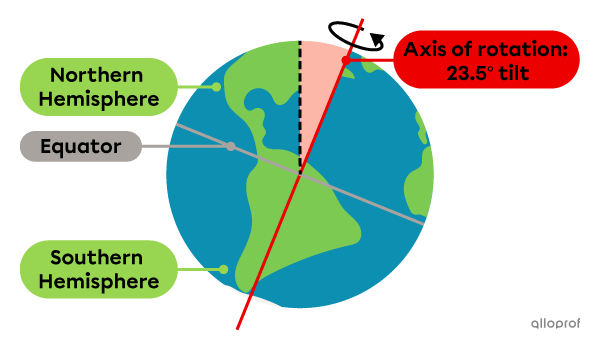
The Earth’s axis of rotation is an imaginary line around which the Earth rotates.  It is tilted approximately 23.5° away from vertical.
Description

The Earth’s axis of rotation is an imaginary line around which the Earth rotates.

It is tilted approximately 23.5° away from vertical.

Second column
Title (level 3)
The Earth’s Revolution
Title slug (identifier)
revolution
Image
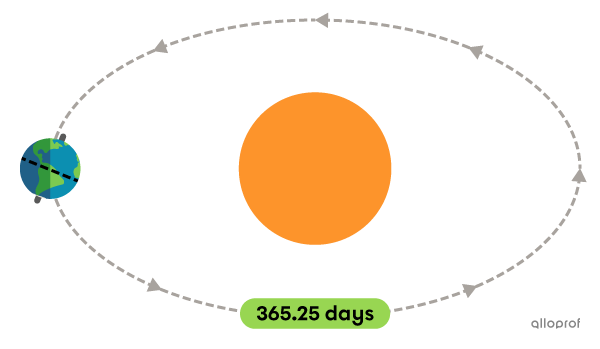
Diagram of the Earth orbiting the Sun, with a revolution time of approximately 365.25 days.
Description

It takes the Earth 365.25 days to complete one revolution around the Sun. This represents a year and is called the Earth’s revolution.
 

Corps

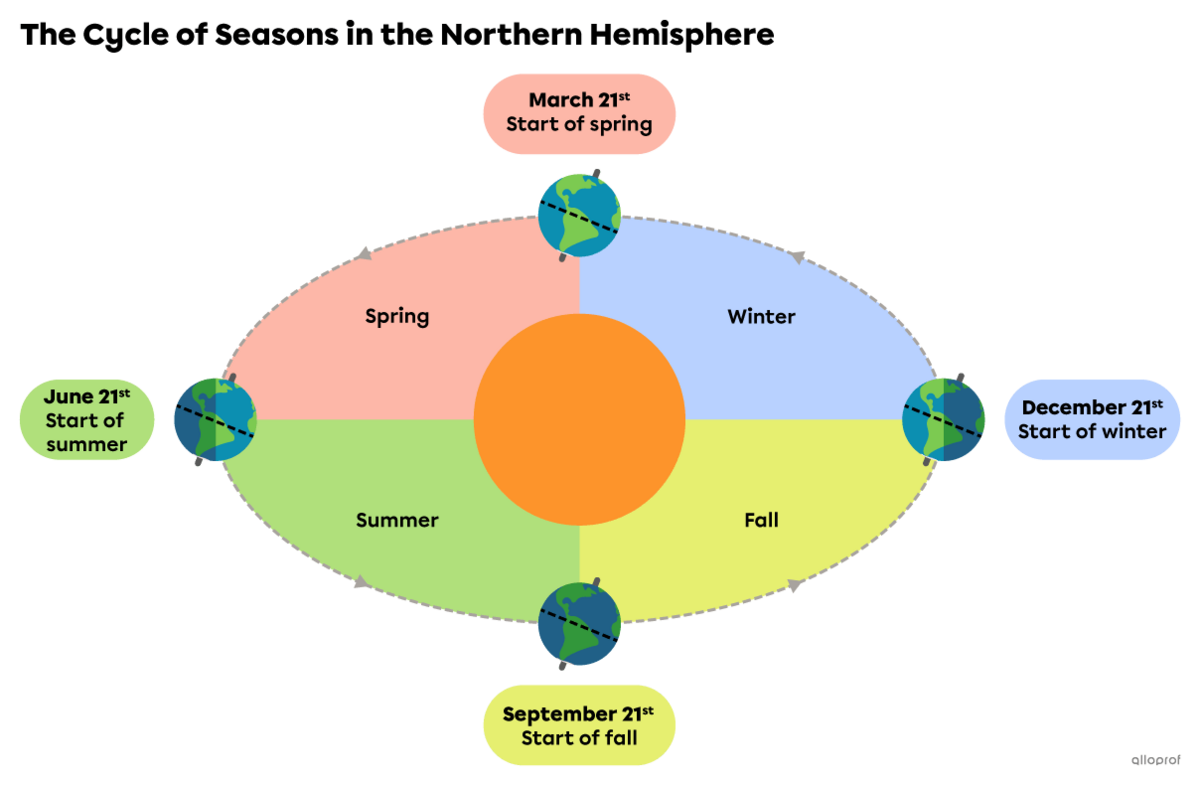
The following image shows the Earth’s tilt throughout a revolution. It also shows when each season begins in the Northern Hemisphere.
File
is1805-[Seasons _ Elementary] - Traduction.pdf
Texte bouton
Print this image
Image
Diagram of the four seasons of the year, showing the different positions of the Earth as it revolves around the Sun. The start dates of each season are indicated.
Description

Attention! Sometimes the starting date of a season varies by one or two days.
Title (level 3)
Characteristics of Each Season
Title slug (identifier)
characteristics-of-each-seasons
Columns number
2 columns
Format
50% / 50%
First column
Image
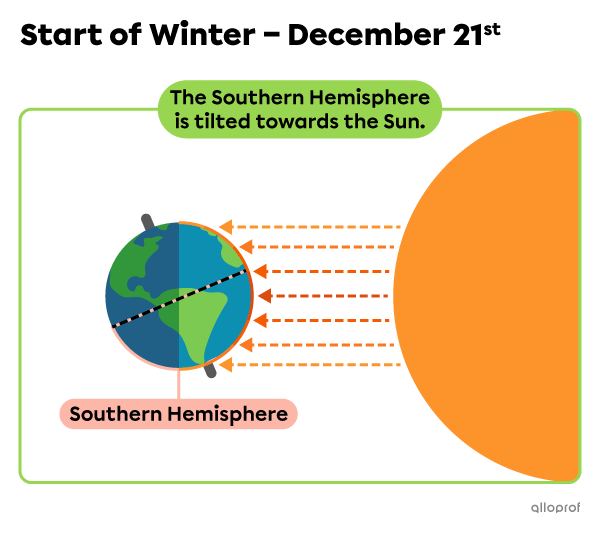
Diagram of the Earth’s position relative to the Sun on the first day of winter in the Northern Hemisphere, illustrating the Earth’s tilt and the intensity of sunlight.
Second column
Corps
  • Sunlight strikes less intensely in the Northern Hemisphere than in the Southern Hemisphere. 

  • December 21st is also the shortest day of the year in the Northern Hemisphere. 
Columns number
2 columns
Format
50% / 50%
First column
Image
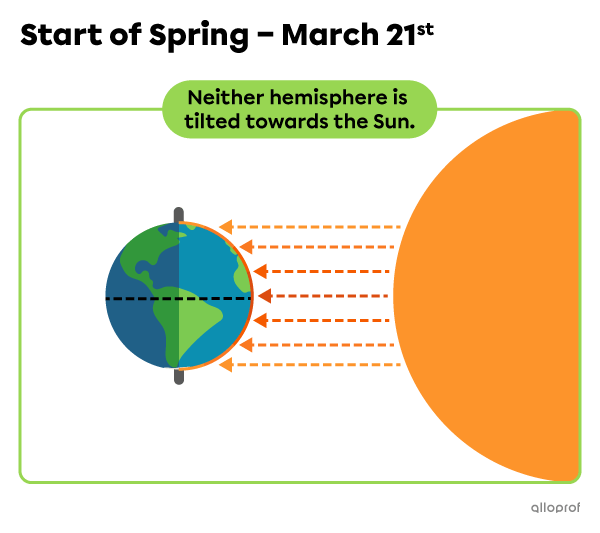
Diagram of the Earth’s position relative to the Sun on the first day of spring. Neither hemisphere is tilted, and sunlight is equally distributed between the two hemispheres.
Second column
Corps
  • Sunlight strikes both hemispheres with the same intensity.

  • Daytime and nighttime are the same length.
Columns number
2 columns
Format
50% / 50%
First column
Image
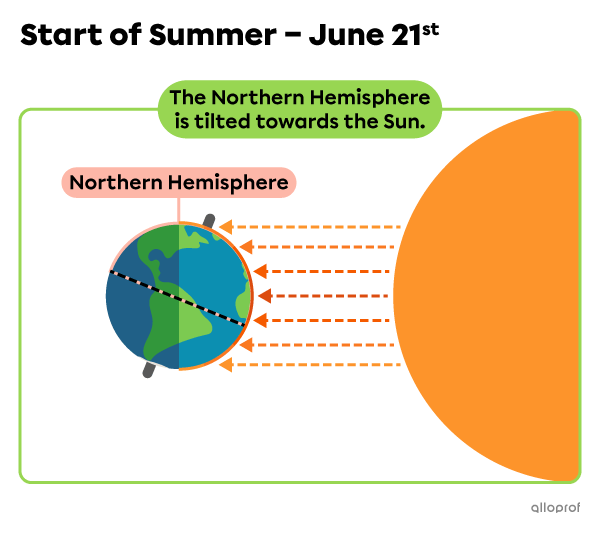
Schéma de la position de la Terre par rapport au Soleil lors de la première journée de l’été en Amérique du Nord, illustrant l’inclinaison de la Terre et l’intensité des rayons solaires.
Second column
Corps
  • Sunlight strikes more intensely in the Northern Hemisphere than in the Southern Hemisphere.

  • This is the longest day of the year in the Northern Hemisphere.
Columns number
2 columns
Format
50% / 50%
First column
Image
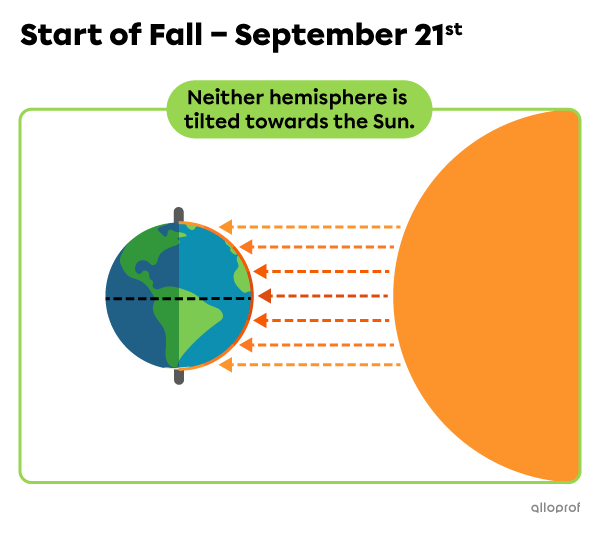
Diagram of the Earth’s position relative to the Sun on the first day of fall. Neither hemisphere is tilted, and sunlight is equally distributed between the two hemispheres.
Second column
Corps
  • Sunlight strikes both hemispheres with the same intensity.

  • Daytime and nighttime are the same length.

Title (level 2)
Vidéo
Title slug (identifier)
video-le-cycle-des-saisons
Title (level 2)
Exercice
Title slug (identifier)
exercice
Contenu
Largeur de l'exercice
720
Hauteur de l'exercice
720
Title (level 2)
See Also
Title slug (identifier)
see-also
Contenu
Links
Remove audio playback
No
Printable tool
Off