Learning Together is an Institut des troubles d’apprentissage initiative to help your child overcome difficulties in French and math. Discover our activities designed to help you support them as they develop their literacy and numeracy skills!
Phonological awareness (identifying and understanding the sounds in words) is an essential skill for language development in preschool and elementary-aged children.
The activities in this sequence are designed to help you work with your child on learning the sounds and sound sequences within words. By playing around with rhymes, segmenting words into sounds and syllables, and using everyday objects to represent them, you can help your child develop this skill.
These 12 activities are designed to fit easily into your family routine and to be done in order. They were created specifically to help children with learning disabilities, but all children can benefit from them!
You will need:
- Everyday objects
- Tokens
- Word bank (in appendix)
- 26 lowercase letters
- 26 uppercase letters
- Illustrations of everyday objects (from a board game or book) livre)
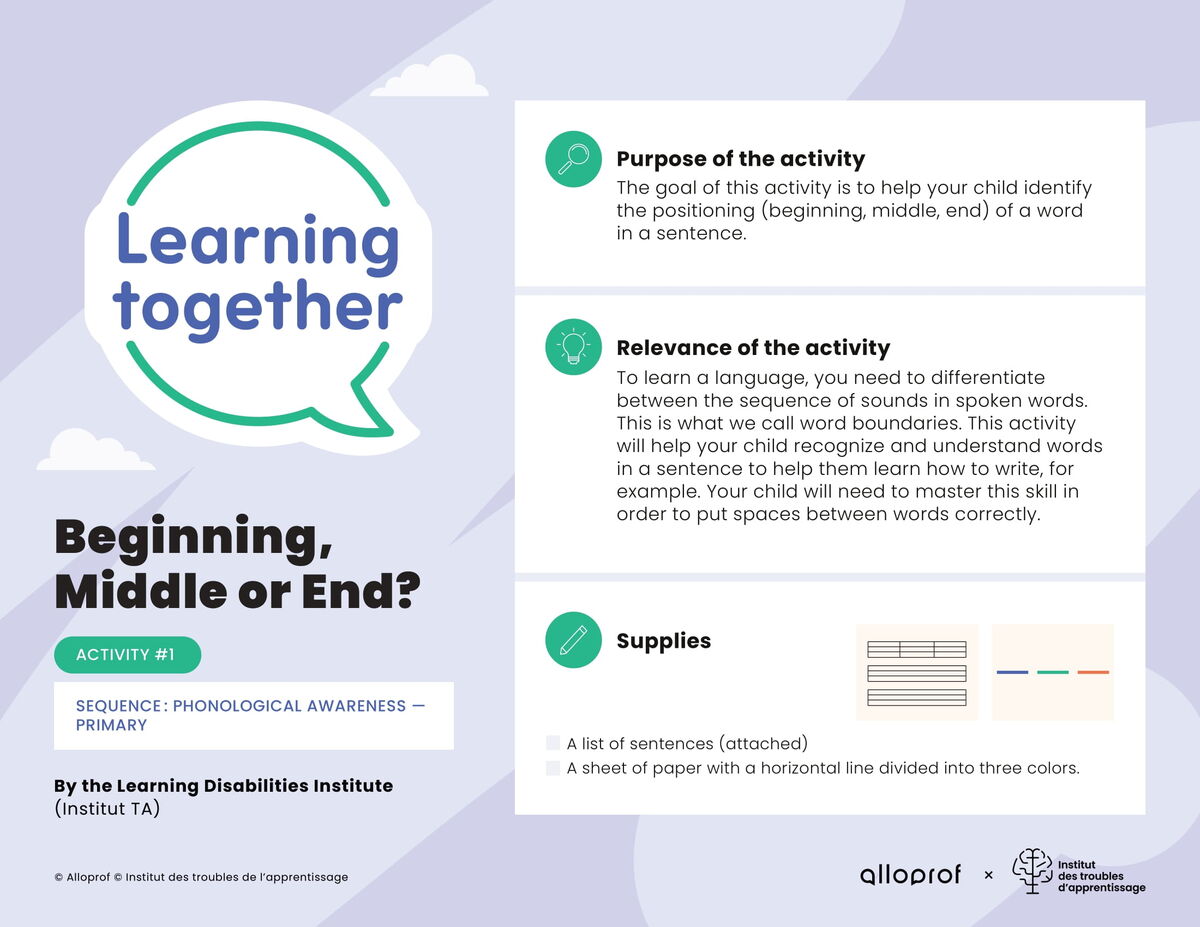
This activity is designed to help your child identify the position of words in a sentence, an important skill when learning to write, as it helps them recognize words and space them correctly.
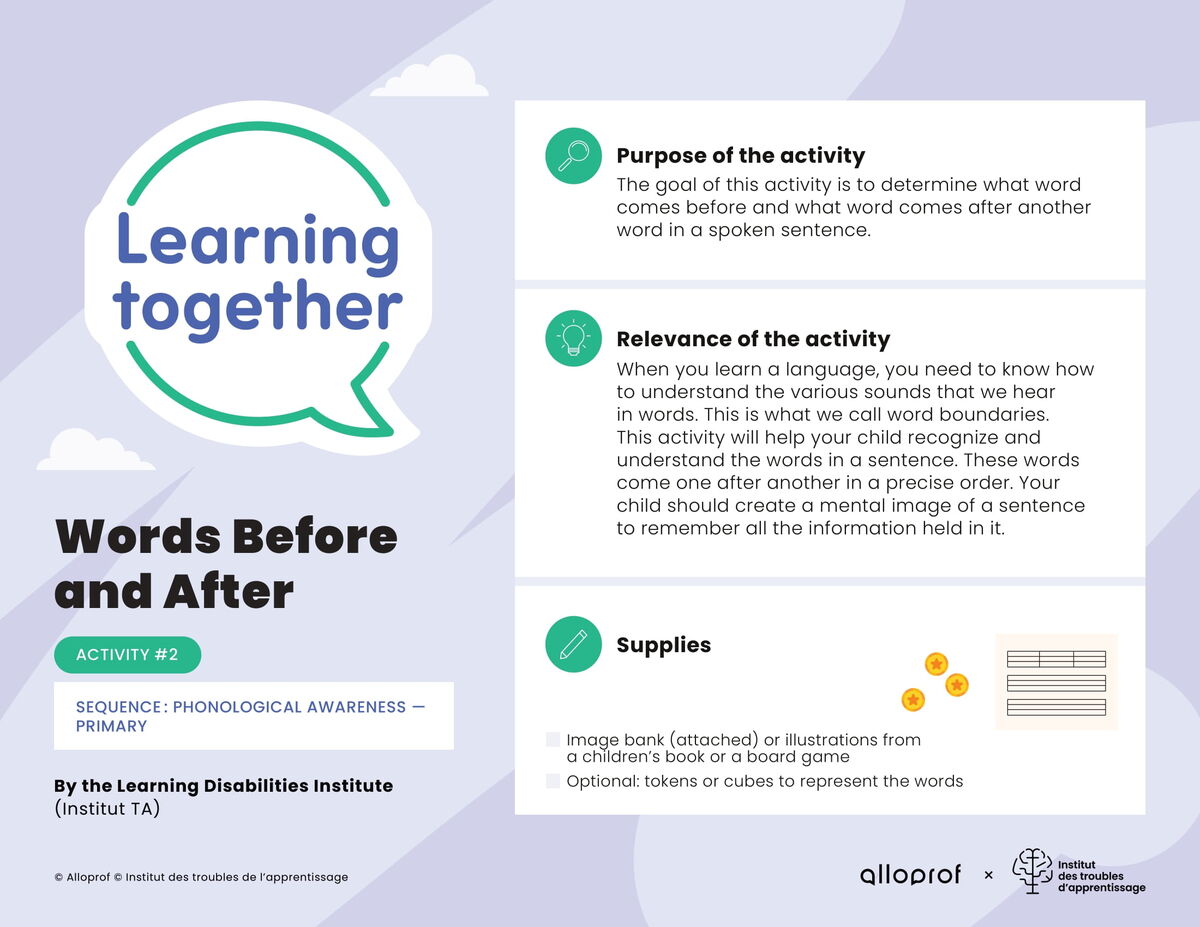
Understanding which word precedes or follows another in a sentence being read to them will help your child build a strong mental representation of sentence structure. This fun reading time activity will help them develop an awareness of the logical word order in sentences.
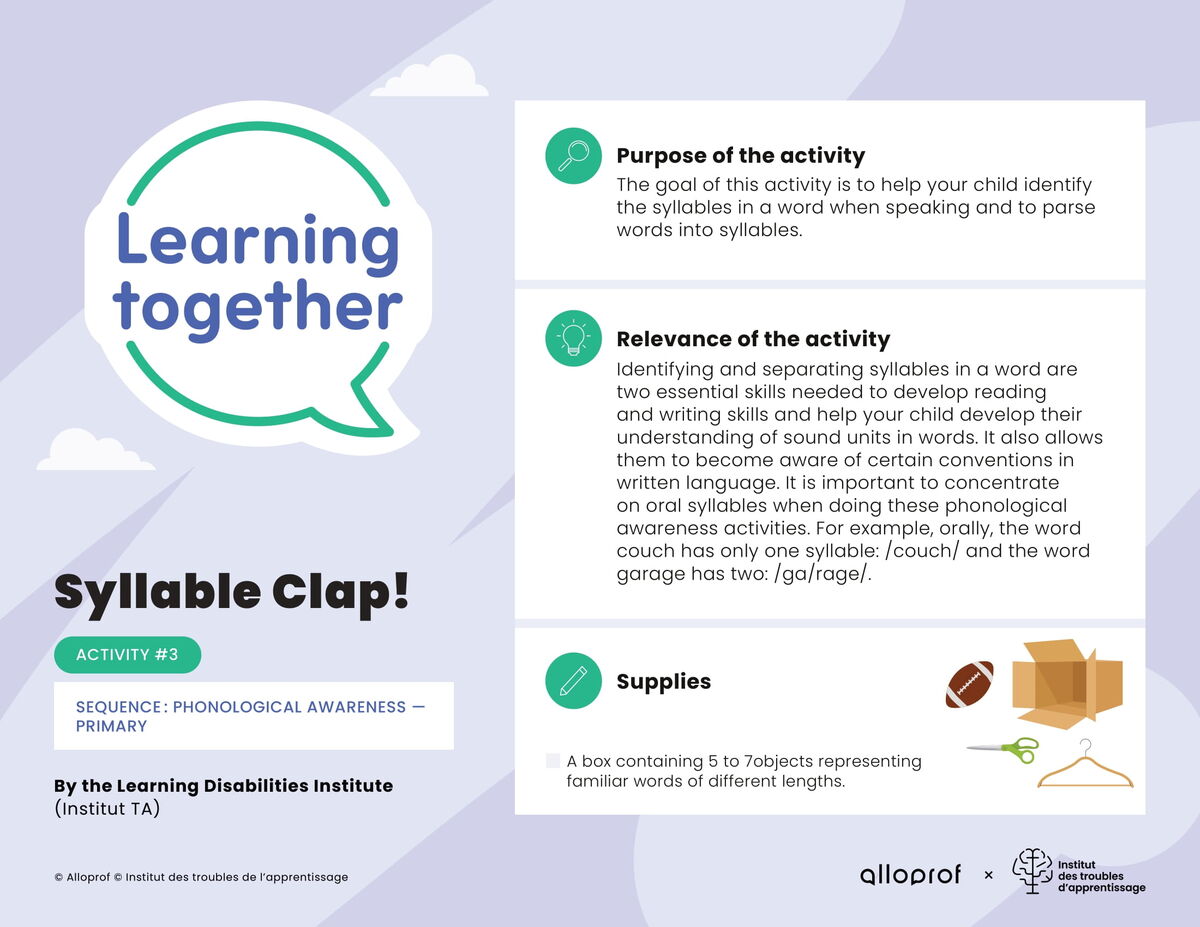
One of the essential skills in developing phonological awareness is the ability to separate words into syllables out loud. This activity gives you tips to help your child identify and segment syllables, which will improve their perception of the sounds in words.
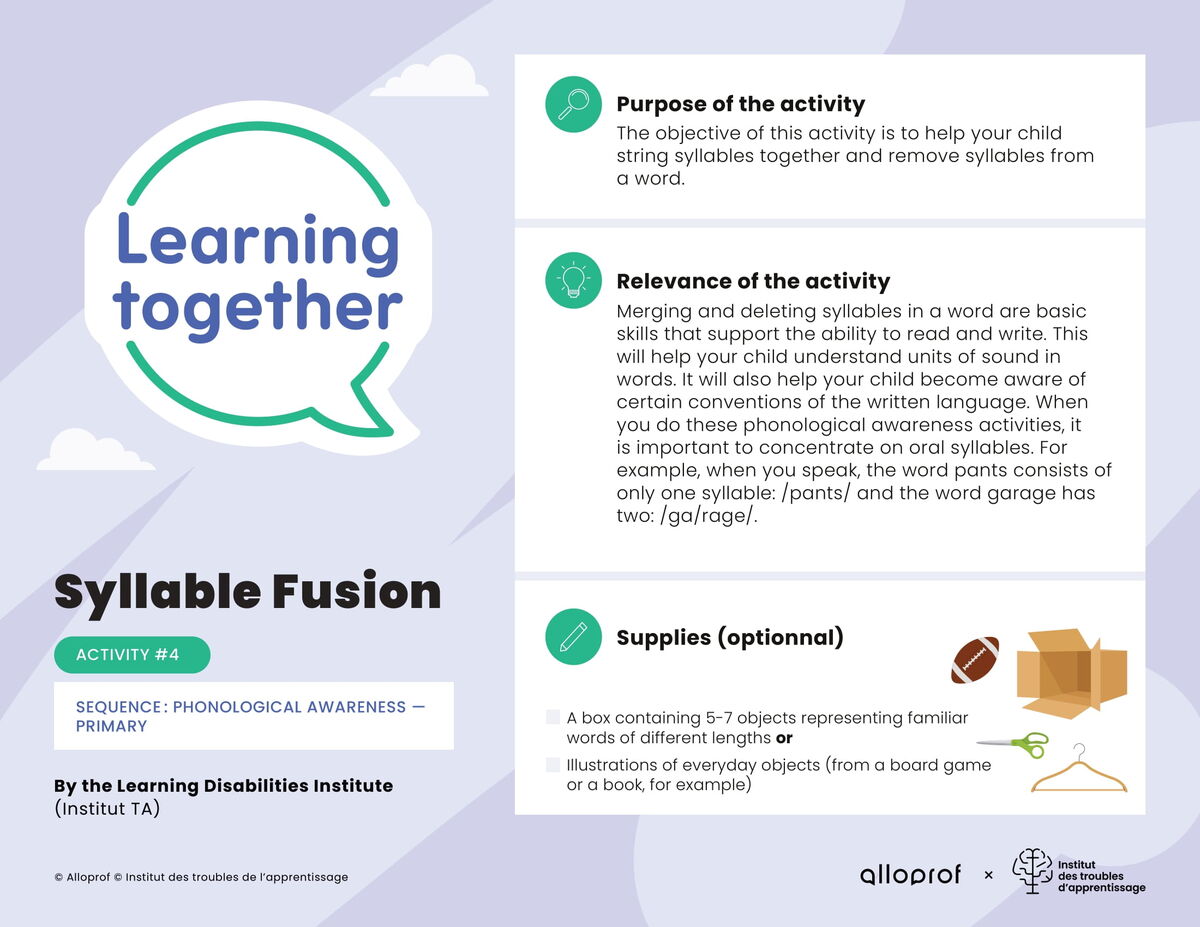
Playing around with syllables together, by merging syllables or taking syllables out of a word, for example, will help your child become more aware of the sounds in words. This skill is essential for writing and reading; it reinforces a child’s understanding of the units of sound in words.
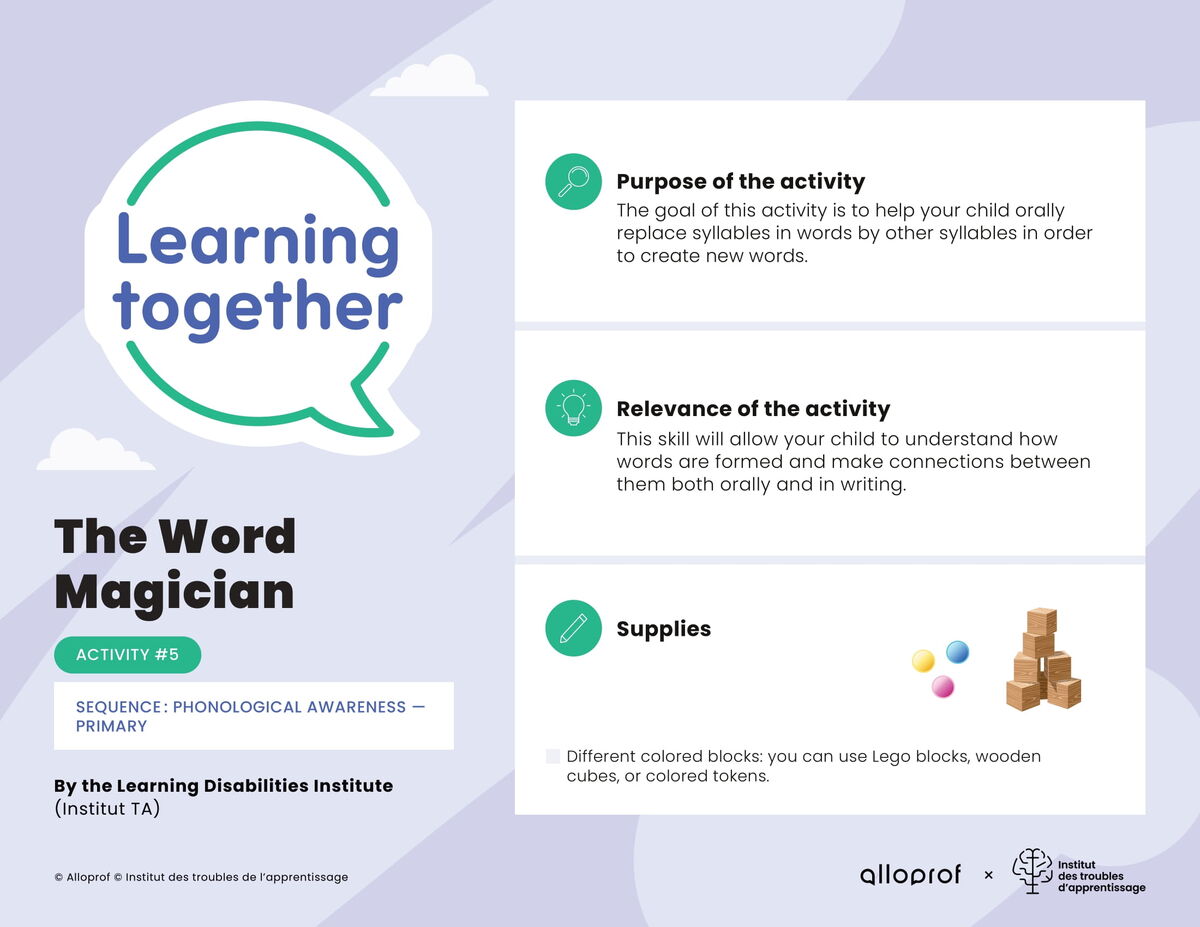
The purpose of this fun game is to swap out syllables in a word to form new words; it will help your child understand how words are formed and how they relate to one another.
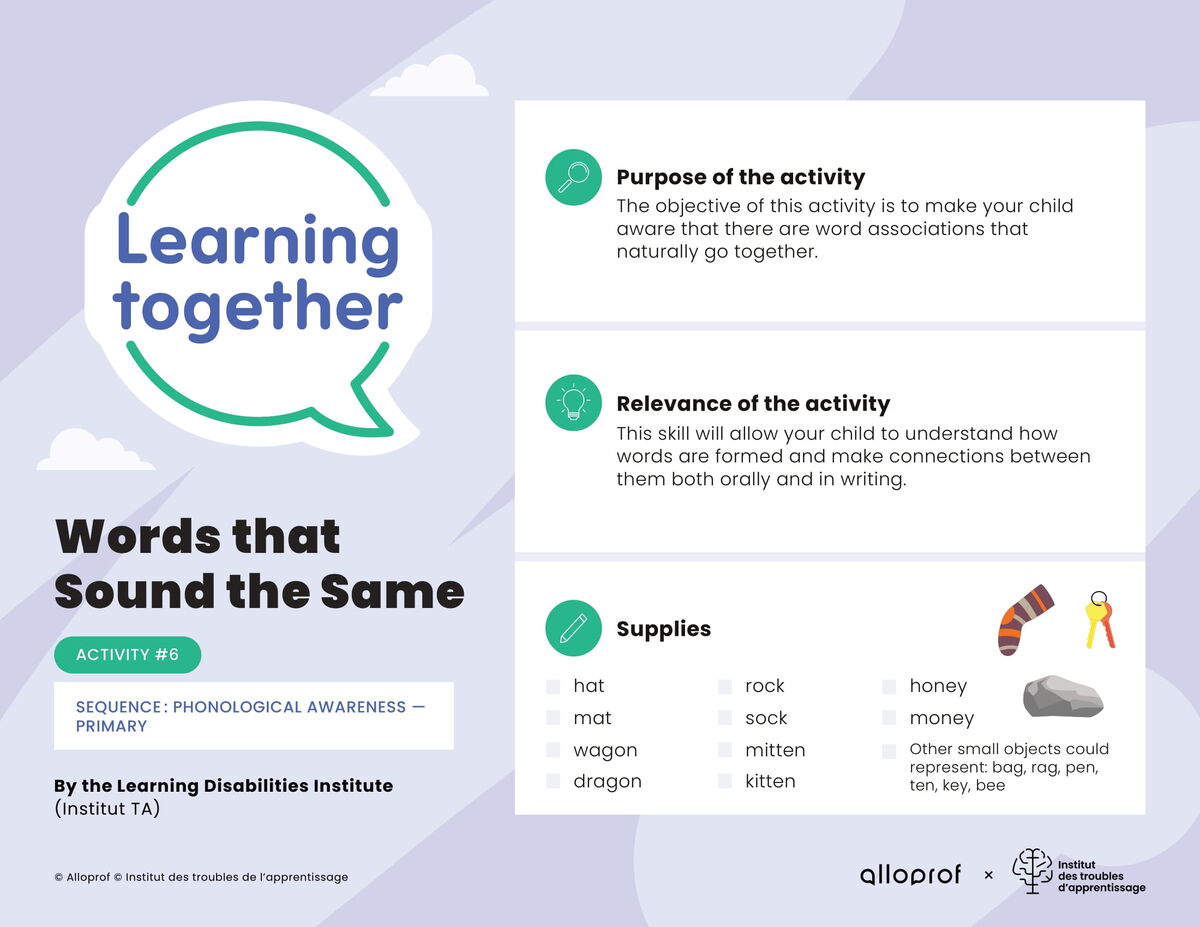
Play is an essential part of making learning fun! During this activity, your child will discover rhyming sounds by exploring everyday objects with similar-sounding names. By playing around with rhymes and sounds, your child will become familiar with words and make connections between them.
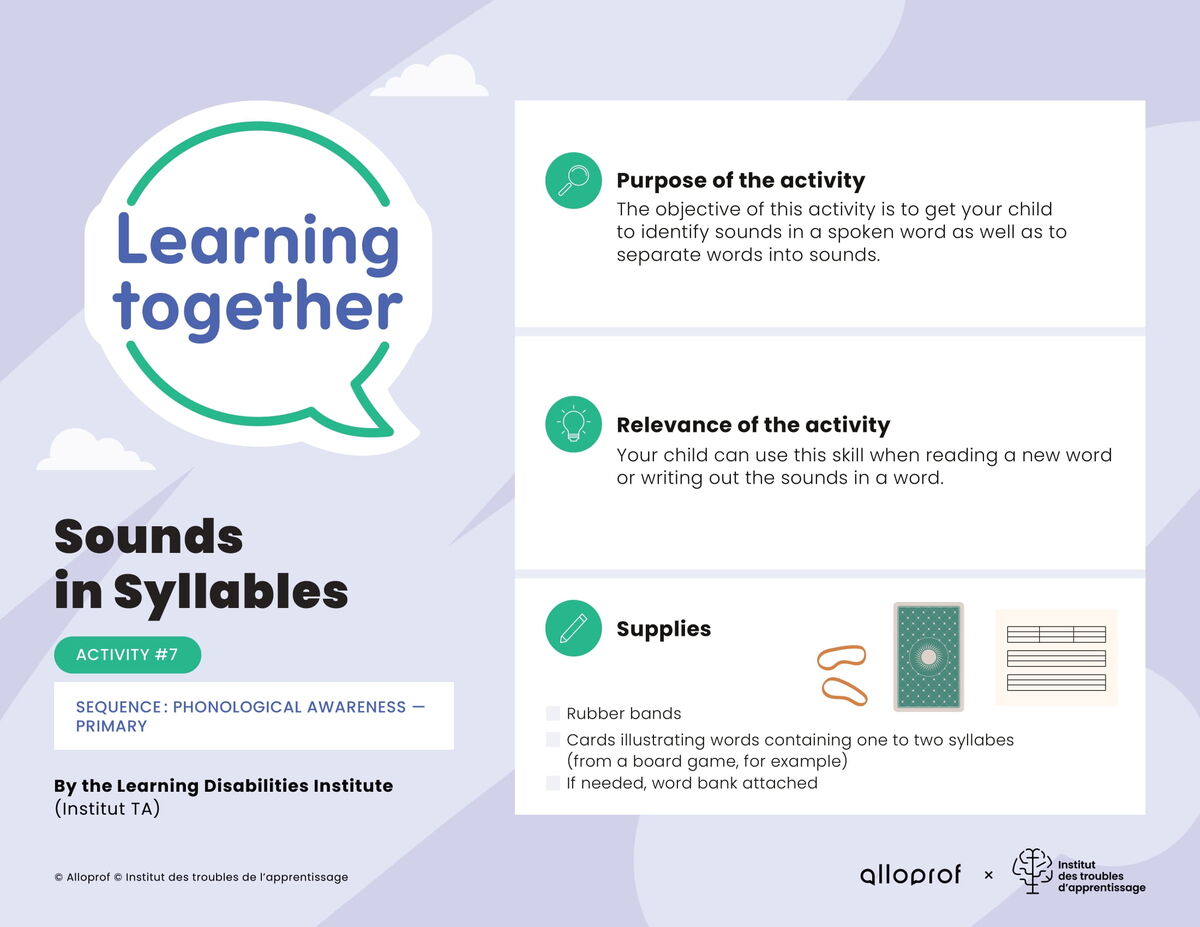
It is important to practise manipulating syllables with your child to help them learn to identify and segment the sounds in a word. By breaking words down into smaller parts, your child will develop essential reading and writing skills.
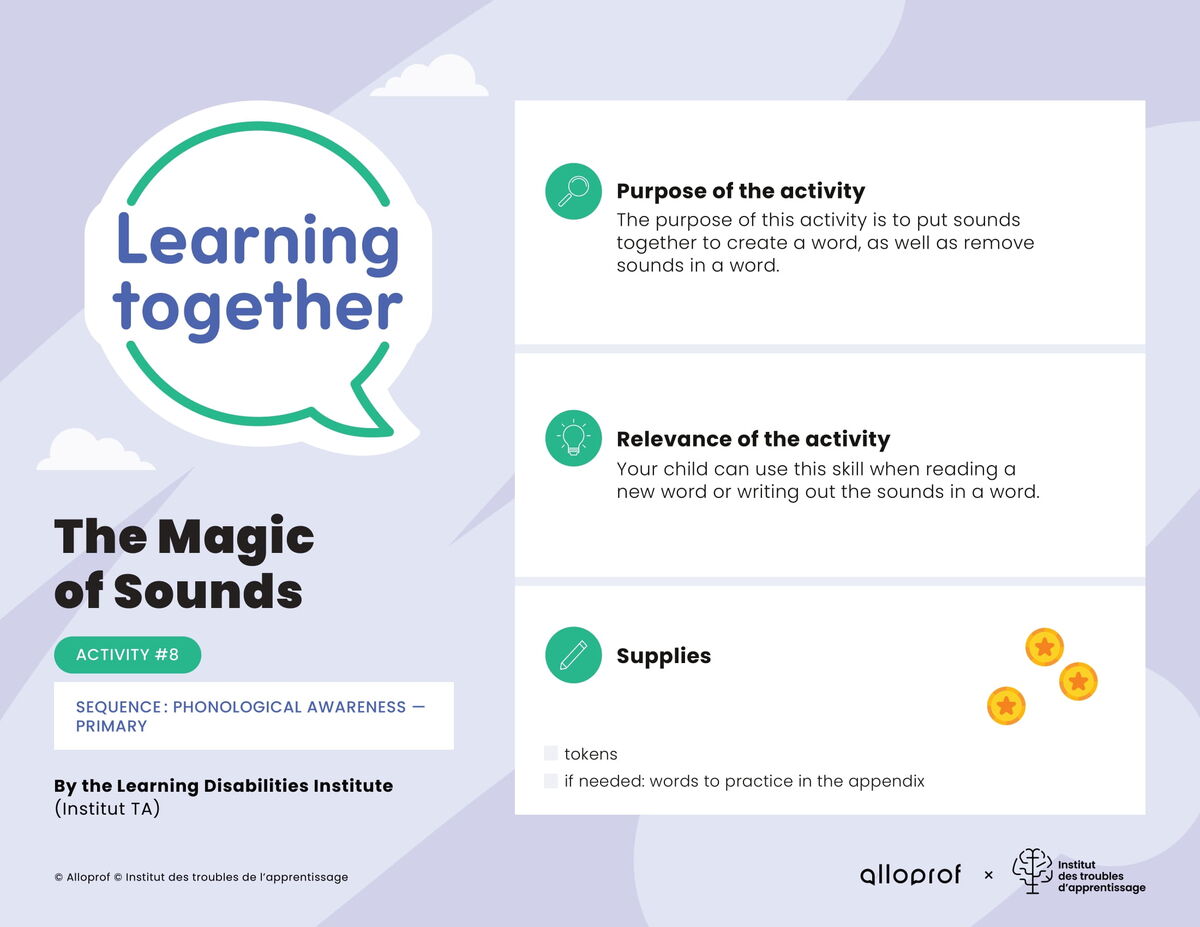
Playing with word sounds can open up a whole new world of sound in language. By exploring how words change when sounds are added or removed, your child will develop phonological awareness, all while having fun!
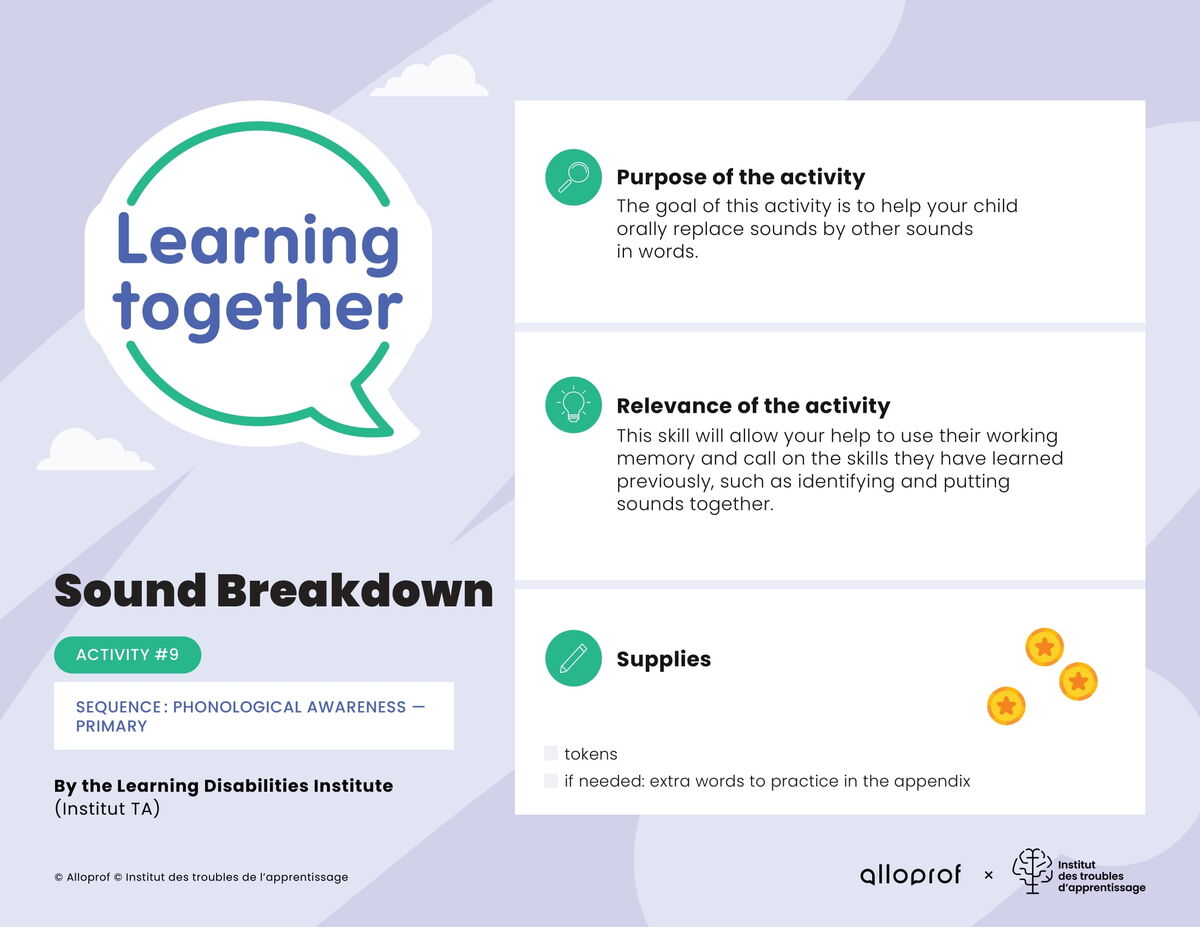
In this ninth activity, your child will play with spoken sounds by moving them around or replacing them with other sounds to create new words. You can then check if these new words already exist. It’s a great way to enrich their vocabulary while stimulating their creativity and imagination.
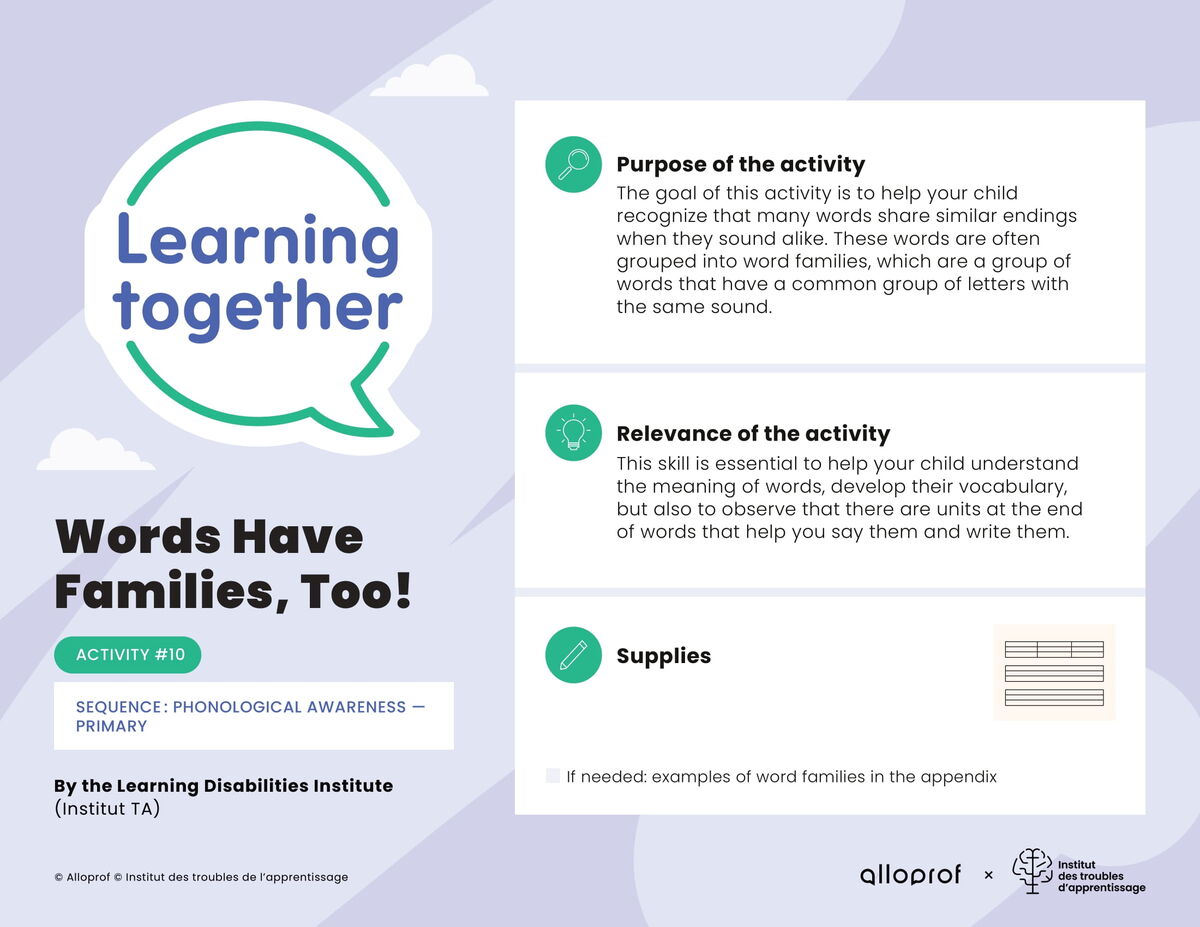
Encourage your child to learn that many French words are created from small units of meaning, and are often grouped into families. This activity allows your child to expand their vocabulary, understand the meaning of words, and recognize the major units that make up the words.
Well done! You’ve made it to the final activity! This activity introduces your child to the idea that words are made up of small units that give clues about their meaning, in this case, the units at the start of a word. It will also enrich their vocabulary and understanding of how words are formed by introducing them to prefixes.
Congratulations—you've reached the final step! This final activity is a logical continuation of the previous activity, this time focusing on word endings. It will teach your child that word endings sometimes give us helpful clues about a word’s meaning!
Pull out your favourite letter-based game (or print out an alphabet) for this special activity. The objective is to help your child recognize upper and lower case letters, as well as the sounds they produce. It lays an invaluable foundation for learning to decode words, read, and write.
This sequence is part of a collection of tools and resources to help your child develop reading, writing, and math skills.
Check out our featured topic Learning Together to explore our entire collection of activities!

Check out our other resources to help and support your child in developing phonological awareness.
The activities were written by Marie-Philippe Goyer, an educational therapist, for the Institut des troubles d’apprentissage.