Content code
a0153
Slug (identifier)
grammar-vocabulary-expressions
Parent content
Grades
Primaire 3
Primaire 4
Primaire 5
Primaire 6
Topic
Anglais
Introduction
Grammar-related vocabulary and expressions.
Content







Title (level 2)
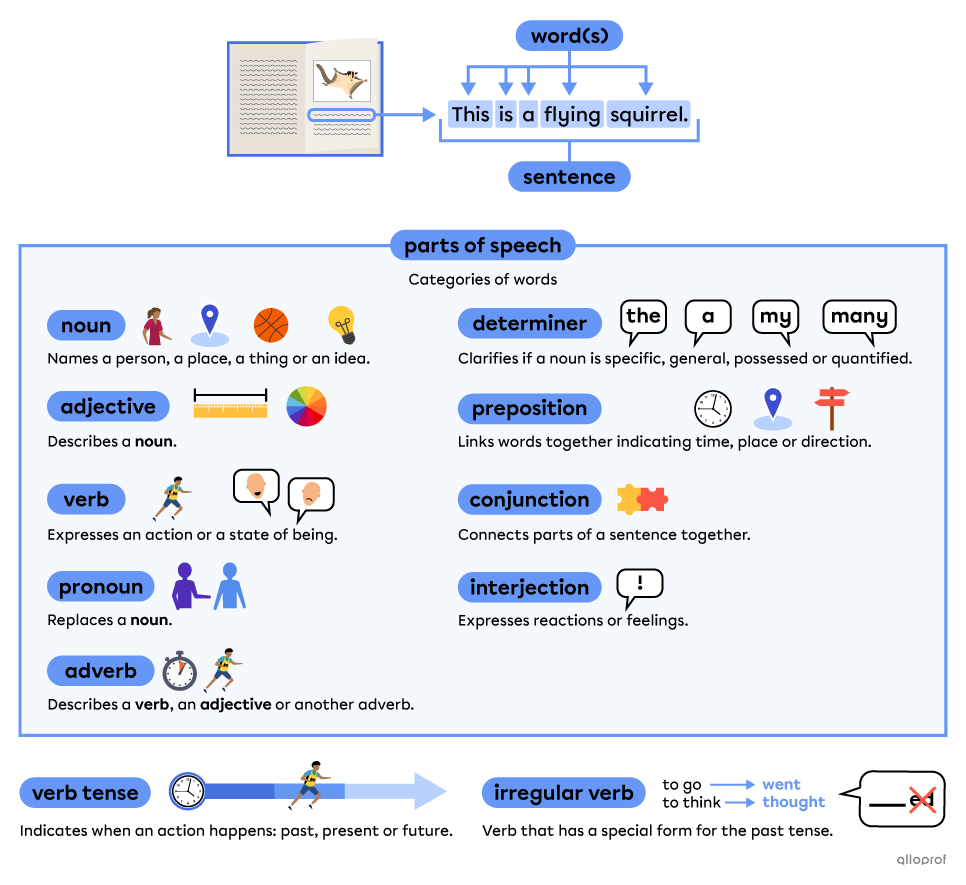
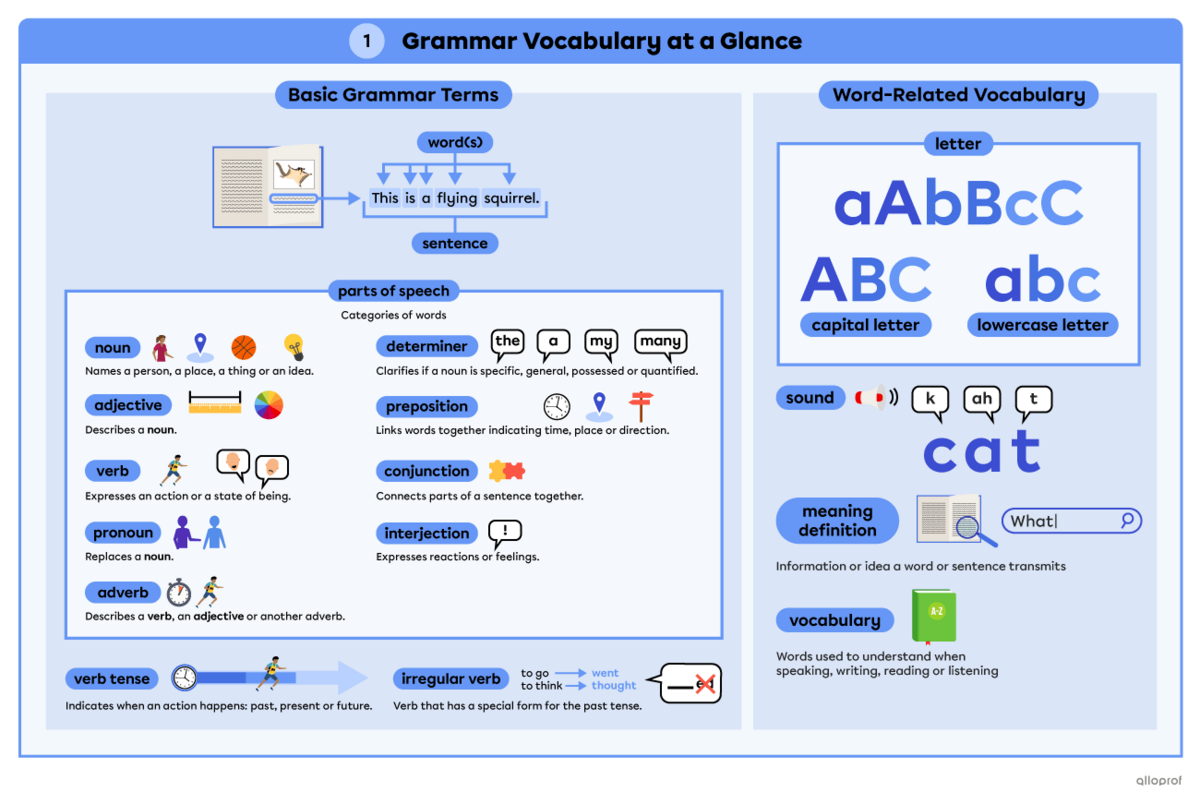
Basic Grammar Terms
Title slug (identifier)
basic-grammar-terms
Contenu
Image
Description
For more on these topics:
- Sentences
- Word Classes (Parts of Speech)
- Verb Tenses
- Irregular Verbs
File
Basic Grammar Terms – Downloadable
Texte bouton
Click to download.
Contenu
Title
Click to listen to the Basic Grammar Terms.
Content
Sons
Title
word
Son
word.mp3 (21.94 KB)
Title
sentence
Son
sentence.mp3 (26.53 KB)
Title
parts of speech
Son
parts of speech.mp3 (33.16 KB)
Title
noun
Son
noun.mp3 (21.43 KB)
Title
adjective
Son
adjective.mp3 (30.61 KB)
Title
verb
Son
verb.mp3 (20.92 KB)
Title
pronoun
Son
pronoun.mp3 (21.43 KB)
Title
adverb
Son
adverb.mp3 (25.51 KB)
Title
determiner
Son
determiner.mp3 (28.06 KB)
Title
preposition
Son
preposition.mp3 (28.06 KB)
Title
conjunction
Son
conjunction.mp3 (30.1 KB)
Title
interjection
Son
interjection.mp3 (30.61 KB)
Title
verb tense
Son
verb tense.mp3 (26.53 KB)
Title
irregular verb
Son
irregular verb.mp3 (38.26 KB)
Title (level 2)
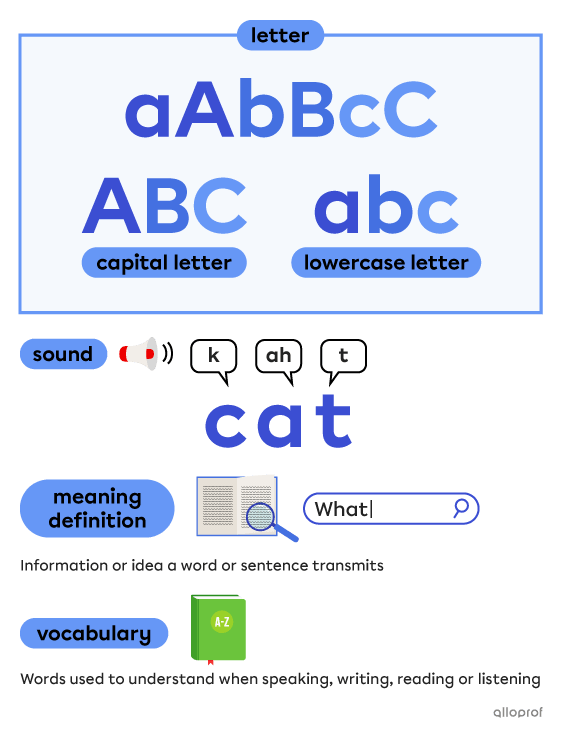
Word-Related Vocabulary
Title slug (identifier)
word-related-vocabulary
Contenu
Image
File
Word-Related Vocabulary – Downloadable
Texte bouton
Click to download.
Contenu
Title
Click to listen to the Word-Related Vocabulary.
Content
Sons
Title
letter
Son
letter.mp3 (21.94 KB)
Title
capital letter
Son
capital letter.mp3 (30.1 KB)
Title
lowercase letter
Son
lowercase letter.mp3 (31.63 KB)
Title
sound
Son
sound.mp3 (21.43 KB)
Title
meaning
Son
meaning.mp3 (21.43 KB)
Title
definition
Son
definition.mp3 (29.59 KB)
Title
vocabulary
Son
vocabulary.mp3 (22.96 KB)
Title (level 2)
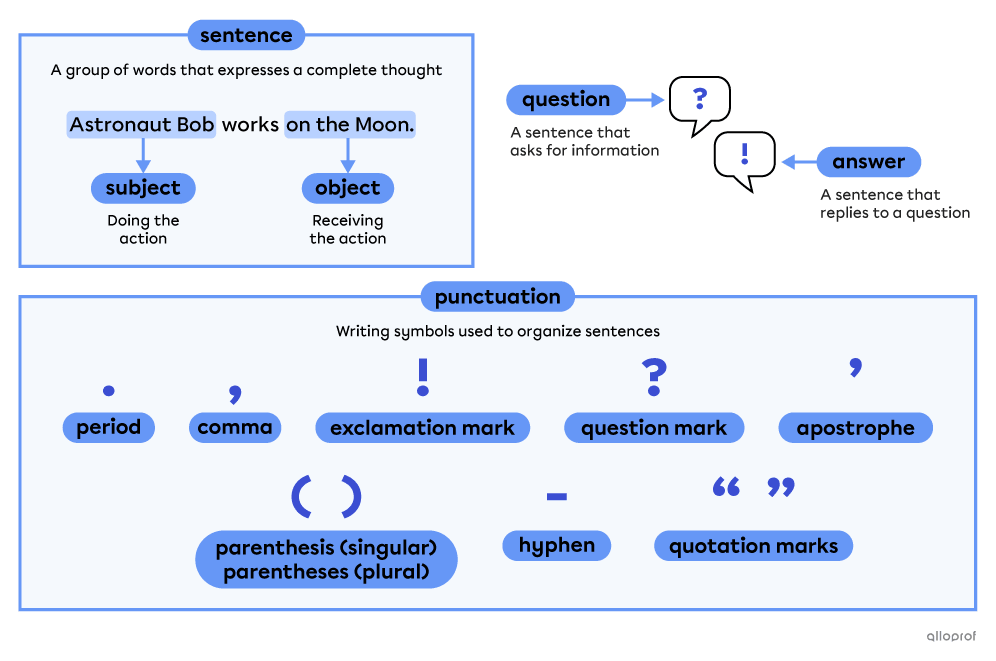
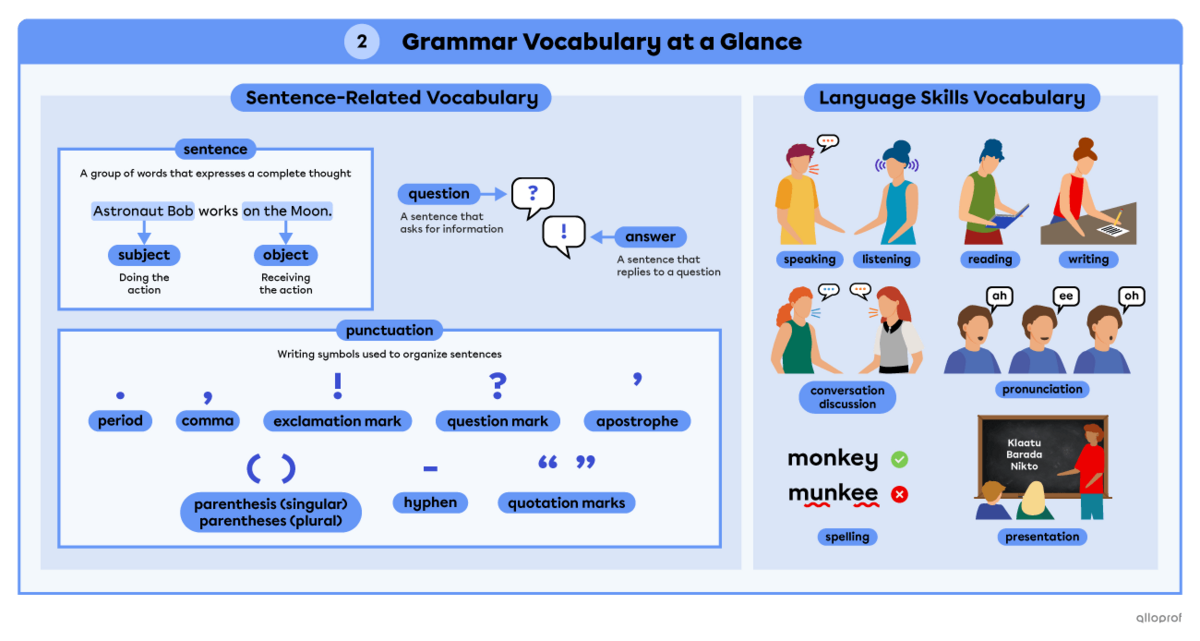
Sentence-Related Vocabulary
Title slug (identifier)
sentence-related-vocabulary
Contenu
Image
Description
For more on these topics:
File
Sentence-Related Vocabulary – Downloadable
Texte bouton
Click to download.
Contenu
Title
Click to listen to the Sentence-Related Vocabulary.
Content
Sons
Title
sentence
Son
sentence_0.mp3 (26.53 KB)
Title
subject
Son
subject.mp3 (25.51 KB)
Title
verb
Son
verb_0.mp3 (20.92 KB)
Title
object
Son
object.mp3 (20.92 KB)
Title
question
Son
question.mp3 (16.84 KB)
Title
answer
Son
answer.mp3 (23.98 KB)
Title
punctuation
Son
punctuation.mp3 (26.02 KB)
Title
period
Son
period.mp3 (20.41 KB)
Title
comma
Son
comma.mp3 (21.94 KB)
Title
exclamation mark
Son
exclamation mark.mp3 (38.78 KB)
Title
question mark
Son
question mark.mp3 (21.94 KB)
Title
apostrophe
Son
apostrophe.mp3 (29.08 KB)
Title
parenthesis (singular)
Son
parenthesis.mp3 (32.14 KB)
Title
parentheses (plural)
Son
parentheses.mp3 (27.55 KB)
Title
hyphen
Son
hyphen.mp3 (21.43 KB)
Title
quotation marks
Son
quotation marks.mp3 (25 KB)
Title (level 2)
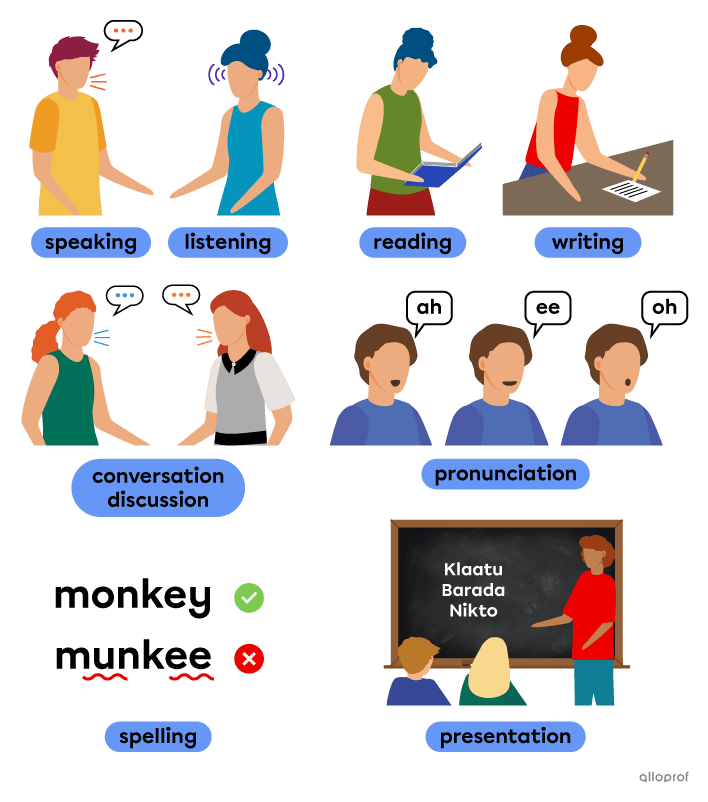
Language Skills Vocabulary
Title slug (identifier)
language-skills-vocabulary
Contenu
Image
File
Language Skills Vocabulary – Downloadable
Texte bouton
Click to download.
Contenu
Title
Click to listen to the Language Skills Vocabulary.
Content
Sons
Title
speaking
Son
speaking.mp3 (23.47 KB)
Title
listening
Son
listening.mp3 (21.94 KB)
Title
reading
Son
reading.mp3 (16.84 KB)
Title
writing
Son
writing.mp3 (18.88 KB)
Title
conversation
Son
conversation.mp3 (32.65 KB)
Title
pronunciation
Son
pronunciation.mp3 (27.04 KB)
Title
spelling
Son
spelling.mp3 (22.45 KB)
Title
presentation
Son
presentation.mp3 (33.67 KB)
Title (level 2)
Grammar Vocabulary at a Glance
Title slug (identifier)
grammar-vocabulary-at-a-glance
Contenu
Image
Image
File
Grammar Vocabulary at a Glance – Downloadable
Texte bouton
Click to download.
Title (level 2)
Grammar Vocabulary Exercise
Title slug (identifier)
grammar-vocabulary-exercise
Contenu
Corps
(Coming soon)
Title (level 2)
Advanced Grammar Vocabulary
Title slug (identifier)
advanced-grammar-vocabulary
Contenu
Text
Table of contents
Links
Type
Anchor
Title
Advanced Grammar Terms
Anchor
advanced-grammar-terms
Type
Anchor
Title
Advanced Verb-Related Vocabulary
Anchor
advanced-verb-related-vocabulary
Type
Anchor
Title
Advanced Sentence-Related Vocabulary
Anchor
advanced-sentence-related-vocabulary
Title (level 3)
Advanced Grammar Terms
Title slug (identifier)
advanced-grammar-terms
Corps
| Noun-related | |
| singular nouns | Only 1. (Ex: cat, a child) |
| plural nouns | More than 1. (Ex: cats, children) |
| common nouns | Name general people, places or things. (Ex: artist, studio, project) |
| proper nouns | Name specific people, places or things. (Ex: Leonardo Da Vinci, Italy, the Mona Lisa) |
| countable nouns | Nouns we can count using numbers. (Ex: people, book) |
| uncountable nouns | Nouns we cannot count with numbers. (Ex: water, sand) |
| Adjective-related | |
| comparative adjectives | Adjectives used to compare 2 things. (Ex: bigger than, more expensive than) |
| superlative adjectives | Adjectives used to compare more than 2 things. (Ex: the best, the most useful) |
| possessive adjectives | Adjectives used to indicate noun ownership. (Ex: my, you, her) |
| demonstrative adjectives | Adjectives used to indicate the position of an object. (Ex: this, that, these, those) |
| Pronoun-related | |
| personal pronouns | Replace the name of a person, place or thing. (Ex: I, me, you, it) |
| possessive pronouns | Replace a noun and perform the main action of the sentence. (Ex: mine, yours, ours) |
| subject pronouns | Replace nouns that act as the subject of a sentence. (Ex: I, you, we) |
| object pronouns | Replace a noun and receive the action of the verb. (Ex: me, him, them) |
| Word features & forms | |
| synonyms | Words that have similar or identical meanings. (Ex: calm & relaxed) |
| antonyms | Words that have opposite meanings. (Ex: calm & excited) |
| homophones | Words that sound the same but have different spellings and meanings. (Ex: to, too, two) |
| homonyms | Words that sound the same, have identical spellings but have different meanings. (Ex: a bat for baseball & a bat that has wings animal) |
| homographs | Words that have the same spelling but sound different and have different meanings. (Ex: live as in to reside and live as in in real-time) |
| contractions | Shortened word forms leaving out certain letters and replacing them with an apostrophe ('). (Ex: don’t, it’s, we’ll) |
| abbreviations | Shortened forms of words or phrases. (Ex: Mr., Mrs, FOMO, ASAP) |
Enable zoom
Enabled
Contenu
Title
Click to listen to the Advanced Grammar Terms.
Content
Sons
Title
singular nouns
Son
singular nouns.mp3 (29.08 KB)
Title
plural nouns
Son
plural nouns.mp3 (23.98 KB)
Title
common nouns
Son
common nouns.mp3 (23.47 KB)
Title
proper nouns
Son
proper nouns.mp3 (24.49 KB)
Title
countable nouns
Son
countable nouns.mp3 (25.51 KB)
Title
uncountable nouns
Son
uncountable nouns.mp3 (31.12 KB)
Title
comparative adjectives
Son
comparative adjectives.mp3 (31.63 KB)
Title
superlative adjectives
Son
superlative adjectives.mp3 (37.24 KB)
Title
possessive adjectives
Son
possessive adjectives.mp3 (32.65 KB)
Title
demonstrative adjectives
Son
demonstrative adjectives.mp3 (37.75 KB)
Title
personal pronouns
Son
personal pronouns.mp3 (26.02 KB)
Title
possessive pronouns
Son
possessive pronouns.mp3 (27.55 KB)
Title
subject pronouns
Son
subject pronouns.mp3 (31.12 KB)
Title
object pronouns
Son
object pronouns.mp3 (28.57 KB)
Title
synonyms
Son
synonyms.mp3 (22.45 KB)
Title
antonyms
Son
antonyms.mp3 (23.47 KB)
Title
homophones
Son
homophones.mp3 (23.98 KB)
Title
homonyms
Son
homonyms.mp3 (21.94 KB)
Title
homographs
Son
homographs.mp3 (24.49 KB)
Title
contractions
Son
contractions.mp3 (23.47 KB)
Title
abbreviations
Son
abbreviations.mp3 (29.08 KB)
Title (level 3)
Advanced Verb-Related Vocabulary
Title slug (identifier)
advanced-verb-related-vocabulary
Corps
| main verb | Most important verb of a sentence, showing the main action or state of mind. (Ex: The cats eats a lot.) |
| auxiliary verb | Used with a main verb to express tenses, mood or voice. (Ex: The cat is sleeping.) |
| modal verb | Type of auxiliary verb that also affects the meaning of the verb. (Ex: The cat may ignore you.) |
| infinitive | The base form of a verb. (Ex: to be, to go) |
| gerund | Verb form that ends in -ing and functions as a noun in a sentence. (Ex: skating, swimming) |
| participle | Verb that is used to create different tenses or to describe a noun. (Ex: He is smiling, he is done.) |
| simple present | Verb tense that expresses facts, repeated actions and planned events. (Ex: I look, it takes) |
| simple past | Verb tense that expresses completely finished past actions or events. (Ex: I looked, it took) |
| simple future | Verb tense that expresses actions or events beginning and ending in the future. (Ex: I will look, it’s going to take time) |
| present continuous (present progressive) | Verb tense that expresses actions or events happening right now or currently in progress. (Ex: I am looking, they are taking their time) |
| past continuous (past progressive) | Verb tense that expresses actions or events happening over a period of time in the past. (Ex: I was looking, they were taking their time) |
| future continuous (future progressive) | Verb tense that expresses actions or events that will be in progress at a specific time in the future. (Ex: I will be looking, I will be taking the train) |
| present perfect | Verb tense that expresses past actions or events with present results or unspecified time. (Ex: I have looked, it has taken too long) |
| past perfect | Verb tense that expresses past actions or events that took place one after the other. (Ex: I had looked, I had taken the train) |
| future perfect | Verb tense that expresses actions or events that will be finished by a specific time in the future. (Ex: I will have looked, I will have taken the train) |
| present perfect continuous (present perfect progressive) | Verb tense that expresses actions or events that began in the past and are still in progress in the present. (Ex: I have been looking, I have been taking the train) |
| past perfect continuous (past perfect progressive) | Verb tense that expresses actions or events that started in the past and continued up until another point in the past. (Ex: I had been looking, I had been taking the train) |
| future perfect continuous (future perfect progressive) | Verb tense that expresses actions or events that will continue up until a specific point in the future. (Ex: I will have been looking, I will have been taking the train) |
| verb mood | Verb form that shows the mode or manner in which a thought is expressed. It reveals the speaker's attitude. (Ex: indicative, imperative, interrogative and conditional moods) |
| conditional | Expresses hypothetical situations. (Ex: I wouldn't do that if I were you.) |
| imperative | Used to give commands, instructions, advice, or warnings. (Ex: Stop!, Don’t do it!) |
Enable zoom
Enabled
Contenu
Title
Click to listen to the Advanced Verb-Related Vocabulary.
Content
Sons
Title
main verb
Son
main verb.mp3 (20.92 KB)
Title
auxiliary verb
Son
auxiliary verb.mp3 (34.18 KB)
Title
modal
Son
modal.mp3 (18.88 KB)
Title
infinitive
Son
infinitive.mp3 (21.94 KB)
Title
gerund
Son
gerund.mp3 (19.39 KB)
Title
participle
Son
participle.mp3 (20.41 KB)
Title
simple present
Son
simple present.mp3 (24.49 KB)
Title
simple past
Son
simple past.mp3 (22.45 KB)
Title
simple future
Son
simple future.mp3 (24.49 KB)
Title
present continuous
Son
present continuous.mp3 (26.53 KB)
Title
present progressive
Son
present progressive.mp3 (27.04 KB)
Title
past continuous
Son
past continuous.mp3 (24.49 KB)
Title
past progressive
Son
past progressive.mp3 (23.98 KB)
Title
future continuous
Son
future continuous.mp3 (33.16 KB)
Title
future progressive
Son
future progressive.mp3 (28.57 KB)
Title
present perfect
Son
present perfect.mp3 (20.92 KB)
Title
past perfect
Son
past perfect.mp3 (22.96 KB)
Title
future perfect
Son
future perfect.mp3 (26.53 KB)
Title
present perfect continuous
Son
present perfect continuous.mp3 (34.69 KB)
Title
present perfect progressive
Son
present perfect progressive.mp3 (32.65 KB)
Title
past perfect continuous
Son
past perfect continuous.mp3 (42.35 KB)
Title
past perfect progressive
Son
past perfect progressive.mp3 (38.26 KB)
Title
future perfect continuous
Son
future perfect continuous.mp3 (42.35 KB)
Title
future perfect progressive
Son
future perfect progressive.mp3 (42.35 KB)
Title
verb mood
Son
verb mood.mp3 (20.41 KB)
Title
conditional
Son
conditional.mp3 (22.45 KB)
Title
imperative
Son
imperative.mp3 (19.9 KB)
Title (level 3)
Advanced Sentence-Related Vocabulary
Title slug (identifier)
advanced-sentence-related-vocabulary
Corps
| syntax | Structure and organization of words into understandable sentences. |
| phrase | A group of two or more words that work together to express a single idea. (Ex: on the desk, the big scary hamster) |
| clause | A group of words that contains both a subject and a verb. (Ex: I want to eat, because I’m hungry) |
| compound sentence | A sentence made of two or more simple sentences. (Ex: I wanted to go biking, but it's too cold.) |
| complex sentence | A sentence made of an independent clause and dependent clause. (Ex: We ate cake because it was my birthday.) |
| predicate | Part of a sentence that tells us something about the subject and that contains a verb. (Ex: The cat sleeps on the bed every night) |
| colon ( : ) | Punctuation mark used to introduce a list, present dialogue or a quote and explain or clarify the previous clause. (Ex: The cat likes two things: food and eating food.) |
| semicolon ( ; ) | Punctuation mark used to join 2 independent clauses and for lists with commas. (Ex: I used your credit card; I knew you wouldn’t mind) |
| ellipsis ( … ) | Punctuation mark used to indicate an omission in a quote or to create an effect in dialogue (a pause, hesitation or interruption). (Ex: I know, it’s… nevermind. I forgot.) |
| brackets [ ... ] | Punctuation mark used as parentheses inside parentheses or to add information in a direct quote. Ex: I love animals (fish, birds, mammals [especially the platypus] and dinosaurs). |
| en dash ( – ) | Punctuation mark used to indicate a range or to show a connection between two equal things. (Ex: Hufflepuff won the match 7–2.) |
| em dash ( — ) | Punctuation mark used for emphasis, or to replace commas, parentheses, or colons. (Ex: I love dogs—but please don’t tell my cat.) |
Enable zoom
Enabled
Contenu
Title
Click to listen to the Advanced Sentence-Related Vocabulary.
Content
Sons
Title
syntax
Son
syntax.mp3 (23.98 KB)
Title
phrase
Son
phrase.mp3 (16.33 KB)
Title
clause
Son
clause.mp3 (17.86 KB)
Title
compound sentence
Son
compound sentence.mp3 (43.37 KB)
Title
complex sentence
Son
complex sentence.mp3 (28.06 KB)
Title
predicate
Son
predicate.mp3 (20.41 KB)
Title
colon ( : )
Son
colon .mp3 (17.86 KB)
Title
semicolon ( ; )
Son
semicolon .mp3 (24.49 KB)
Title
ellipsis ( … )
Son
ellipsis ( … ).mp3 (22.96 KB)
Title
brackets [ ]
Son
brackets .mp3 (19.39 KB)
Title
en dash ( – )
Son
en dash ( — ).mp3 (19.39 KB)
Title
em dash ( — )
Son
em dash.mp3 (20.92 KB)
Title (level 2)
See Also
Title slug (identifier)
see-also
Contenu
Links
Type
External
Title
Questions
Remove audio playback
No
Printable tool
Off