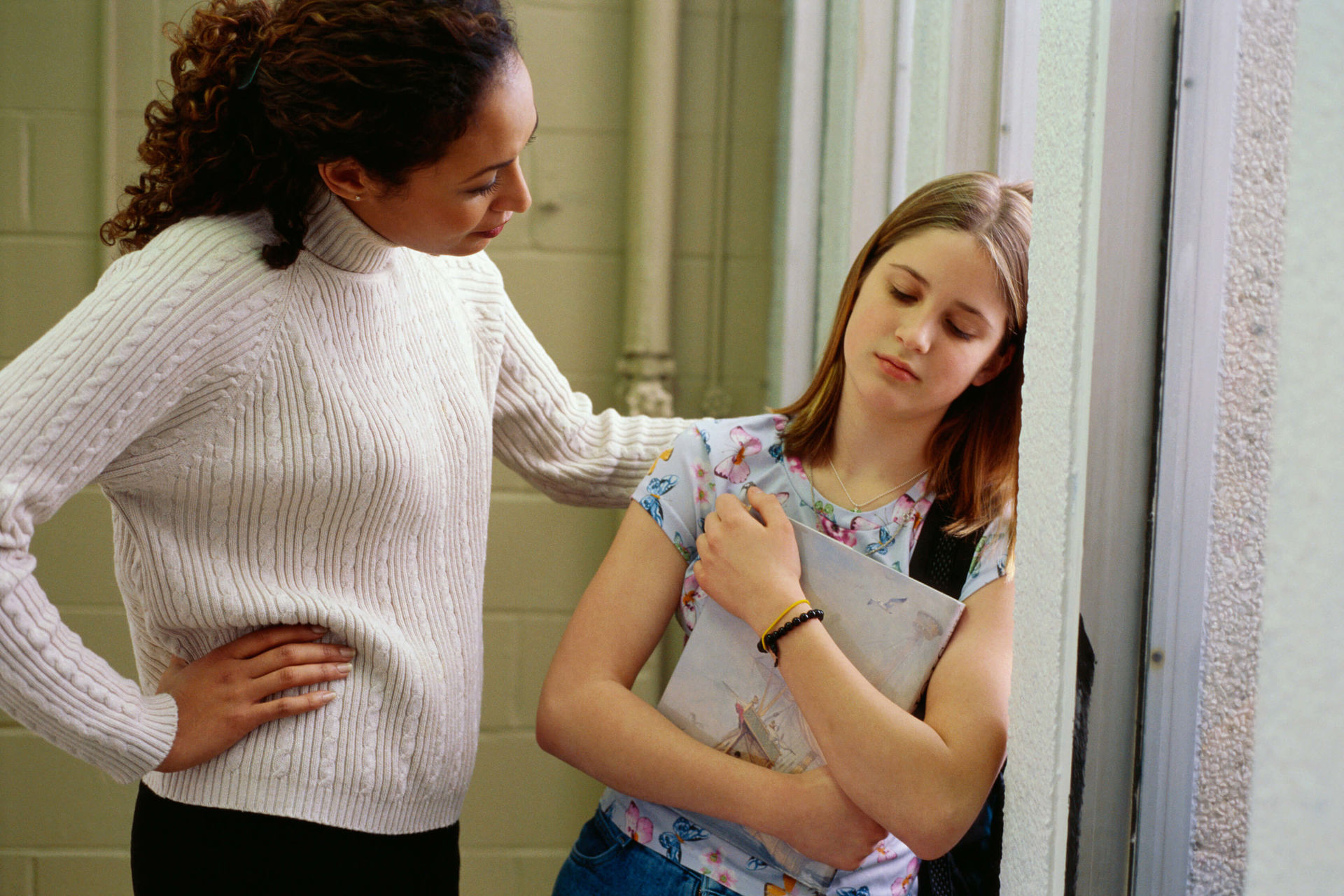
Managing stress and anxiety is something that many students struggle to do, often to the detriment of their academic success, motivation, and self-confidence. While stress and anxiety can have positive effects in small doses (e.g., a desire to perform better, increased focus), frequent and persistent stress can have harmful effects (e.g., distress, exhaustion).
Here are some resources and strategies you can implement to help your students with these issues.
Everyone experiences anxiety at one time or another. Anxiety can resemble fear, and is felt when we are confronted with a perceived threat. It causes all kinds of reactions, whether physiological (e.g., accelerated heartbeat), cognitive (e.g., anticipation of a serious situation), emotional (e.g., fear, anger) or behavioural (e.g., avoidance).Feeling a bit anxious at times is perfectly normal. Anxiety can help us cope with stressful situations, such as a sporting event, an interview, a test, or a breakup. Normally, it disappears as soon as life returns to normal. This type of anxiety is only experienced during stressful situations, but there is a second type that is more pervasive, known as generalized anxiety.
People with generalized anxiety disorder experience continually high levels of anxiety for a period of at least six months. The fear they feel is disproportionate to the events they are experiencing, and their day-to-day responsibilities cause them distress. They are also unable to take a step back and relax.
When a child’s high levels of anxiety and distress are interfering with their daily life (i.e., when they have an anxiety disorder, rather than simply feeling anxious at times), parents should consult a specialist.
Anxiety in children is often accompanied by one or more of the following symptoms:
- Sleep problems
- Loss of appetite
- Avoidance of stressful situations and feeling more intense fears than other children their age
- Refusal to go to school or participate in sports activities
- Difficulty making friends
- Physical symptoms, such as stomach aches, vomiting, and fatigue
- Crying and tantrums
- Freezing up (withdrawing and finding it hard to talk)
Here are some signs that a student might be experiencing school anxiety:
- Before going to school, they may complain of stomach pains, headaches, or that they simply don’t feel well.
- They feel unwell during the week, but never on Saturday or Sunday.
- At the cognitive level, they might be experiencing learning difficulties. For example, they are less attentive in class, their concentration is disrupted more easily, and they have distracting thoughts.
- At the emotional level, students suffering from anxiety have weaker interpersonal skills and a poor understanding of their emotions. For example, they tend to isolate themselves and avoid unpleasant situations.
- At the behavioural level, anxiety can be characterized by opposition and aggressiveness. However, a student may also have internalized behaviours, such as a fear of others, passivity, fear of certain events, performance anxiety, etc.
In addition to anxiety, other factors can contribute to a negative attitude towards school, such as:
- A lack of self-confidence
- Fear of being judged or evaluated or feeling inferior to others
- Fear of failure
- Fear of not meeting the expectations of their parents or teachers
- Conflicts with peers
- Bullying (link in French only)
- Etc.
Performance anxiety is a type of anxiety that can occur at different times during a student’s education. It can be triggered by situations where they are expected to perform well, such as tests, presentations, and competitions. When experiencing performance anxiety, they tend to overestimate the consequences of failing and/or they may compare themself to others. They often show a preference for individual work.
Students with learning disorders might feel that they are not meeting the expectations of others or themselves, that they are disappointing their parents and teachers, and that they are not trying hard enough, despite working very hard. As a result, these students may also experience higher levels of stress, and distress, related to school. For a student with a learning disability who is already experiencing academic difficulties, mental health issues can present a significant barrier in the classroom and make learning even more difficult. By communicating with their family and school support staff, you can help develop coping strategies and establish an individualized education plan to promote the student’s well-being.
Stress is a normal physiological reaction of the body to a real, new, and unpredictable situation that is perceived as threatening or difficult to control. It triggers the secretion of hormones (including cortisol, also called “stress hormone”) that allow us to act and defend ourselves against danger.
Stress responses vary from child to child and can be influenced by their age, developmental level, temperament, and personality, as well as the reactions of those around them. The demands of school (success, tests, homework, rules), as well as family life and relationships with friends, all generate their share of stress in school-age children and teens.
In high-stress situations, students can experience cognitive problems (e.g., memory loss and selective attention) and be resistant to learning. Stress is also “contagious” on a physiological level (e.g., when faced with parents or teachers showing high levels of stress or burnout, children show an increase in their own cortisol levels).
It is important to know your students well in order to understand what is causing them stress. Common tasks at school that can cause a child stress include:
- Keeping up with the teacher and their peers
- Following conversations during group work
- Taking notes while listening
- Listening to different instructions
- Transitioning between subjects or shifting attention between tasks
- Reading quickly and accurately
- Understanding what they read
- Expressing ideas orally or in writing
- Answering a question spontaneously
- Drawing and writing by hand
- Learning spelling and grammar
- Speaking in front of the class
- Participating in physical education class (e.g., doing activities that require hand-eye coordination or following what is happening in a sport)
- Doing homework and assignments
- Solving math problems
- Etc.
There is a difference between stress and anxiety. With stress, the threat is actually in front of us, here and now. On the other hand, anxiety relates more with a future, imagined threat in our heads.
Here are some ways that teachers can support the mental health and wellness of their students:
- Create a positive classroom environment
- Reduce the stigma around mental health
- Take the time to get to know your students and have individual meetings with them
- Talk about mental health in the classroom
- Create safe spaces in the classroom to take a break, breathe, and recover
- Ensure that students eat, move, and play at school
- Promote cooperation over competition and comparison to others
- Encourage students to use “I” statements to verbalize what they need to help them learn
- Teach and model emotional intelligence
- Help students develop a sense of self-efficacy
- Encourage students to be assertive around other students and to interact socially through class discussions
- Support students when they give an oral presentation or participate in a sports competition
- Help students improve their resilience to bounce back from setbacks
- Show students that mistakes are not the end of the world and recognizing their efforts
- Help students cultivate a productive mindset (as opposed to a fixed one, where they give up easily and think trying repeatedly is a sign that they’re not smart enough)
- Be predictable: a teacher’s smile and tone of voice can make a student feel safe in the classroom
- Help students discover their strengths and develop their full potential
- Encourage students to be kind to each other
- Provide opportunities for everyone to succeed
- Etc.
It is not your responsibility as a teacher to diagnose mental health issues. However, you can help promote positive mental health at school and refer students to the appropriate services.
Alloprof has a wealth of resources and practical tools to help you create a caring environment for students that prioritizes mental health. Some of the tools are aimed at parents, so feel free to share them! Here are a some examples:
- Tool for helping kids express how they feel (for parents of preschoolers)
- Loving notes to boost a child’s confidence (for parents and teachers of elementary students)
- 100 notes to leave in your child’s lunch box (for parents, but can also be used in elementary classrooms)
- Motivational notes to develop self-confidence while working on making sentences (elementary school)
- Magic anti-stress bracelets (elementary school)
- Positive reinforcement tool for stress-free homework (elementary school)
- Inspirational and motivational quotes for academic success (elementary and high school)
- Toolkit to promote quality time with your child (for parents of elementary students)
- Stay zen while colouring mandalas. . . and learning how to write homophones (elementary school) (With answer key!)
- Yoga poses to help relax before a test (elementary school)
- The calm-down toolkit (preschool and elementary school)
- Inspirational phrases for parents and teachers who want to build students’ confidence (elementary school) Similar version for high school students here
- Suggested phrases that students can use to ask for help (elementary school)
- Card game for active breaks in the classroom (elementary school)
- Answers for students who ask why they have to go to school (elementary and high school)
- Phrases to to help motivate students facing challenges (elementary school)
- 10 heartwarming books (elementary school)
- 10 heartwarming books (high school)
- Book recommendations for learning to love words (elementary school)
- Book suggestions for learning to love school (high school)
- French book recommendations to help build self-confidence (elementary school)
- French book recommendations to help build self-confidence (high school)
- Recommended French books that encourage self-acceptance (elementary school)
- Recommended French books that encourage self-acceptance (high school)
- 10 French books to help kids better understand anxiety (elementary school)
- 10 books to help teens better understand anxiety (high school)
- Book suggestions on learning how to name our emotions (elementary school)
- Recommendations for books about cooperation (elementary school)
- Mood thermometer (for parents and elementary school teachers
- Inspirational poster to help students recover from failure (elementary school)
If your high school students need someone to talk to about anything going on in their life, you can refer them to Tel-jeunes, which is free and available at any time.
Writing : The Alloprof Teachers' team